 跳至内容
跳至内容 
Auxiliary lighting — fog lights and driving lights — is one of the most misunderstood areas of automotive lighting. Many drivers use the terms interchangeably, and even more use the lights incorrectly. This guide clears up the confusion once and for all.
Auxiliary Lighting Overview
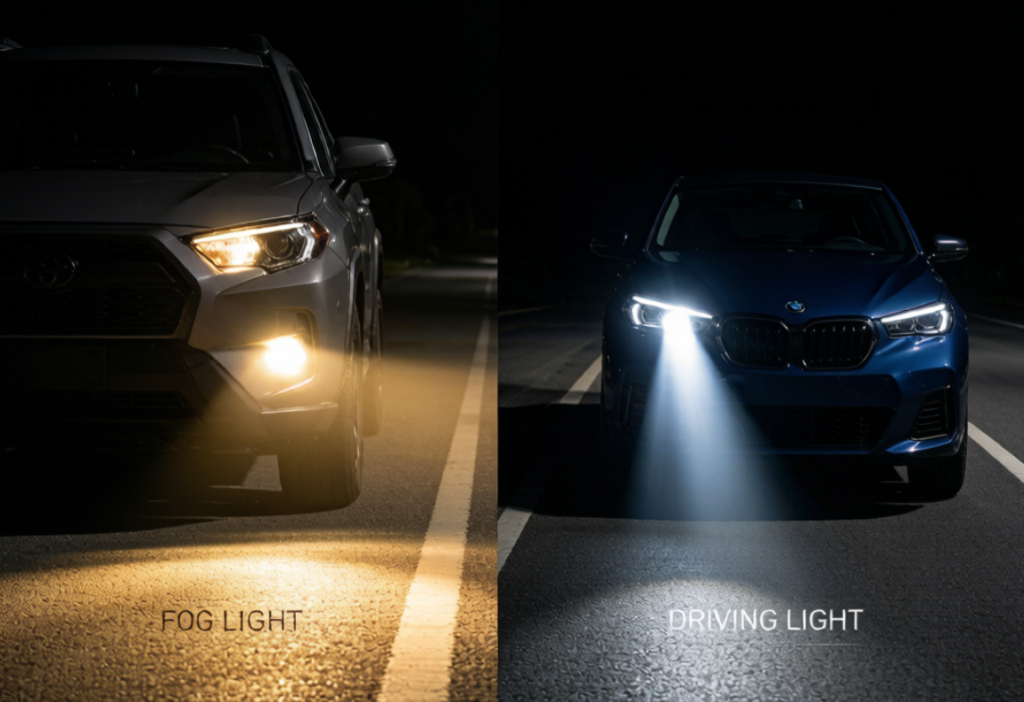
Fog lights and driving lights are both auxiliary lights mounted below the headlights, but they serve completely different purposes. Fog lights illuminate the road surface close to the vehicle with a wide, flat beam. Driving lights project a narrow, long-distance beam for improved forward visibility on clear nights.
The SAE J581 standard defines performance requirements for auxiliary low-beam (fog) lights, while SAE J582 covers auxiliary driving lights.
Fog Lights Explained
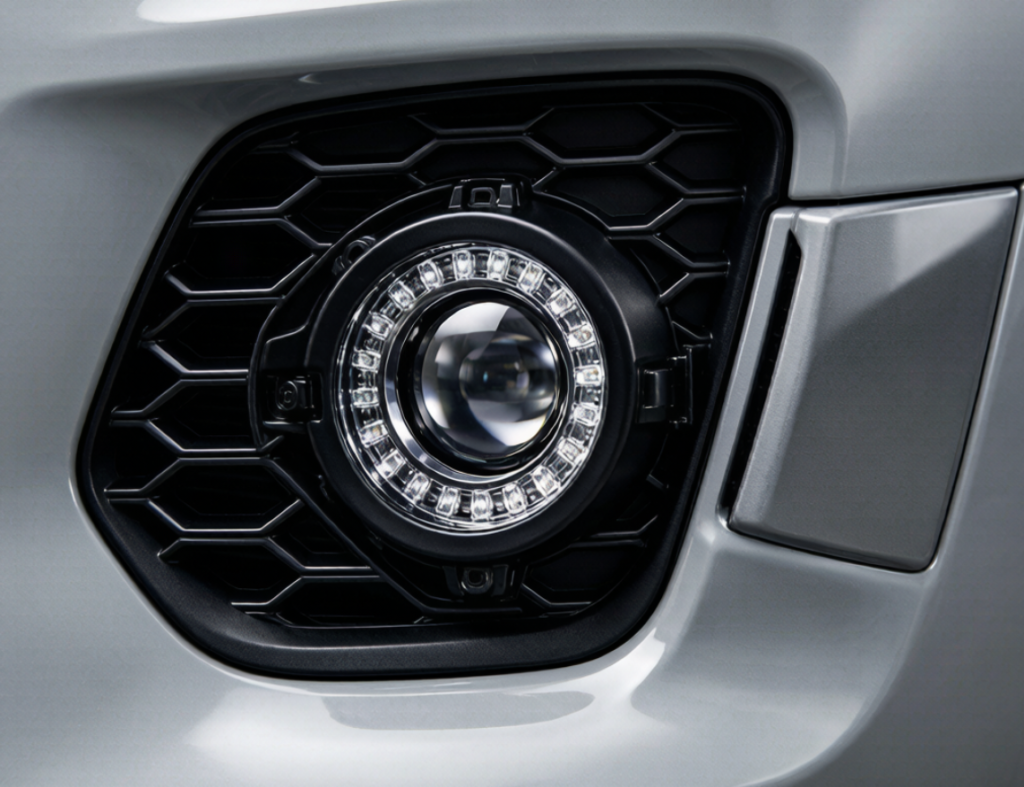
Designed for adverse weather: Fog lights produce a wide, flat beam pattern with a sharp cut-off line at the top. This is intentional — the beam stays low to illuminate the road surface without reflecting off fog, rain, or snow particles. The sharp cut-off prevents back-glare that can momentarily blind the driver.
Typical specs: Color temperature: 3,000K (yellow) or 4,300K (selective yellow). Beam pattern: 30-50° wide, 5-10° tall. Mounting height: 10-24 inches above ground. Typical wattage: 10-20W (LED), 55W (halogen). Use: Fog, rain, snow, dust — only when visibility is severely reduced.
Driving Lights Explained
Driving lights (also called auxiliary high beams) produce a narrow, concentrated beam that extends the driver’s visibility range far beyond standard high beams. They are designed for use ONLY on clear nights when no other vehicles are approaching.
Typical specs: Color temperature: 5,000-6,000K (white). Beam pattern: 10-20° narrow pencil beam. Range: 500-800+ meters. Typical wattage: 20-40W (LED), 55-100W (halogen). Use: Clear nights, rural roads, highways with no oncoming traffic.
Beam Pattern Differences
| Property | Fog Lights | Driving Lights |
|---|---|---|
| Beam shape | Wide, flat (30-50°) | Narrow, focused (10-20°) |
| Beam height | Low cut-off (5-10° above horizontal) | High (parallel to road) |
| Illumination distance | 20-40 meters | 500-800+ meters |
| Road coverage | Road edges (wide) | Road center (far) |
Color & Output Comparison
Fog lights traditionally use yellow/selective-yellow light (3,000-4,300K). Yellow light has longer wavelengths that scatter less in water particles — reducing the blinding back-glare effect in fog. Driving lights use white light (5,000-6,000K) for maximum contrast at distance on clear nights.
When to Use Each
Rule of thumb: Fog lights = adverse weather only. Driving lights = clear nights, no traffic only. If you can see other vehicles, do not use either. Using fog lights on clear nights annoys other drivers and often violates local laws.
Legal Considerations
Most jurisdictions restrict auxiliary light use: Fog lights must be used only in fog, rain, or snow. Maximum of 2 fog lights and 2 driving lights. Driving lights must turn off when high beams are off. Must be mounted at specific heights (typically 12-48 inches above ground). Light color must be white or selective yellow. The NHTSA FMVSS 108 provides the regulatory framework for auxiliary lighting.
LED vs Halogen Auxiliary Lights
LED lights have largely replaced halogen in auxiliary lighting. LEDs offer: lower power consumption (10-20W LED vs 55-100W halogen), longer lifespan (30,000+ hours vs 500 hours), compact size for streamlined bumper integration, instant full brightness (no warm-up), and better thermal management through integrated heatsinks.
Installation Guide
Basic installation steps: Mount lights at the appropriate height (fog lights low, driving lights can be higher). Connect the positive wire through a relay to the battery. Connect the switch wire to the high beam circuit (driving lights) or a dedicated switch (fog lights). Ground to chassis. Always use a relay — do not wire auxiliary lights directly to the existing headlight circuit.
TUHO Auxiliary Lighting Solutions
Looking for quality auxiliary lighting? TUHO Lighting manufactures a complete range of LED fog lights and driving lights designed for durability and performance. Our projector LED fog lights feature precision optics for optimal beam patterns, while our driving lights deliver class-leading distance illumination.Shop TUHO Fog & Driving Lights → | Contact us for OEM/ODM
FAQ
Difference between fog and driving lights?
Fog lights = wide, flat, low beam for adverse weather. Driving lights = narrow, long-distance beam for clear nights.
Can fog lights replace driving lights?
Not effectively — fog lights lack the distance throw needed for highway visibility.
When to use fog lights?
Only in fog, heavy rain, or snow. Never in clear weather — they blind other drivers.
Are LED fog lights better?
Yes — more efficient, longer lasting, more compact, instant on.
Are aftermarket driving lights legal?
Yes, with restrictions on height, brightness, and usage conditions. Check local laws.
Conclusion
Fog lights and driving lights serve completely different purposes and should not be confused. Fog lights are essential safety equipment for adverse weather. Driving lights extend your nighttime visibility range on clear roads. Using the right light for the right condition improves safety for everyone on the road.