 跳至内容
跳至内容 
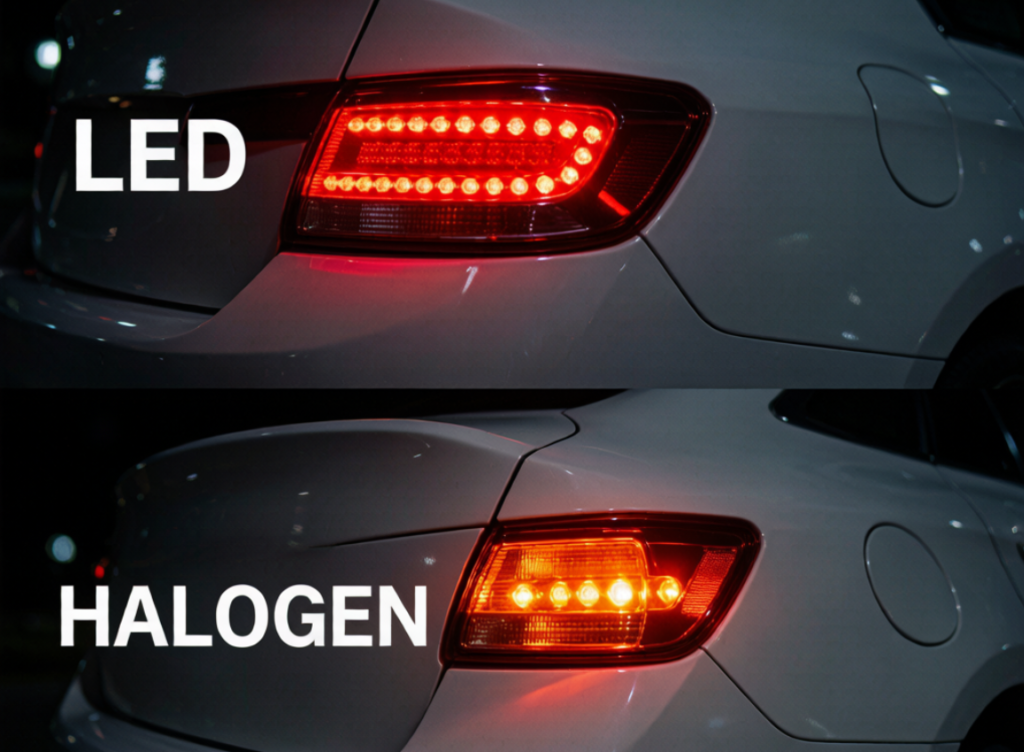
When you press the brake pedal, the brake lights illuminate to warn following drivers. But did you know that not all brake lights illuminate at the same speed? The difference between LED and halogen brake light response time can be the difference between a near-miss and a collision.
The Critical Milliseconds
Brake light response time — the delay between pressing the pedal and the light reaching full brightness — is a critical safety factor that most drivers never consider. The NHTSA (National Highway Traffic Safety Administration) has conducted extensive research on brake light visibility and its role in preventing rear-end collisions.
The Science of Response Time
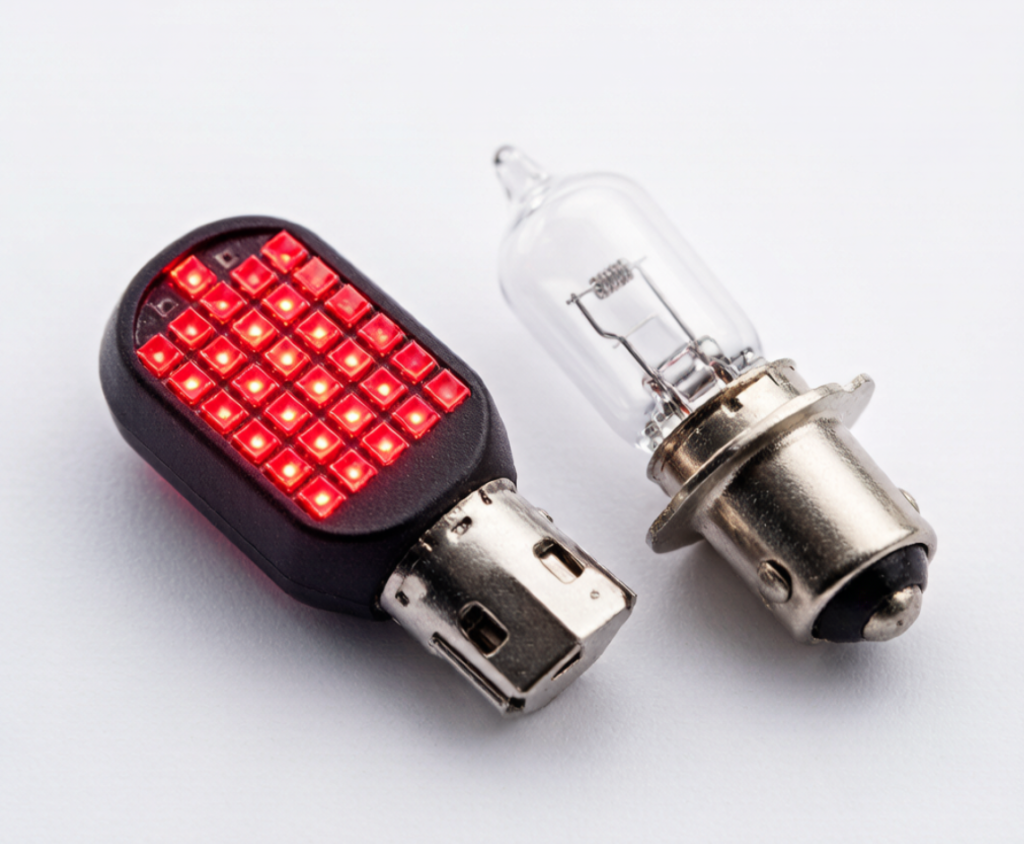
The fundamental difference: Halogen brake lights rely on a tungsten filament that must heat to 2,500°C before producing light. This takes 200-300 milliseconds. LED brake lights use semiconductor diodes that illuminate in 0.1-0.2 milliseconds — essentially instant. The 200-300 ms gap is invisible to the human eye but critically important in emergency braking situations.
Response Time Numbers
| Metric | Halogen | LED | Difference |
|---|---|---|---|
| Time to 10% brightness | 50-80 ms | 0.05 ms | LED ~1,000x faster |
| Time to 90% brightness | 200-300 ms | 0.1-0.2 ms | LED ~1,500x faster |
| Full brightness achieved | 300-400 ms | 0.2-0.5 ms | LED fully on before halogen starts |
Stopping Distance Impact
The 200-300 ms LED advantage directly translates to shorter stopping distances:
- At 30 mph (48 km/h): LED saves 9-13 feet (2.7-4.0 meters)
- At 50 mph (80 km/h): LED saves 15-22 feet (4.6-6.7 meters)
- At 70 mph (113 km/h): LED saves 21-31 feet (6.4-9.4 meters)
Real-world impact: According to IIHS research, vehicles with LED brake lights are involved in 3-5% fewer rear-end collisions than those with halogen brake lights. While this may seem modest, it represents thousands of accidents prevented annually across the vehicle fleet.
Brightness Comparison
LED brake lights are not just faster — they are significantly brighter. A typical LED brake light produces 80-150 candela vs 30-60 candela for halogen. This higher brightness makes them more visible in bright sunlight, fog, and rain. LEDs also maintain consistent brightness for their entire lifespan, while halogen bulbs dim by 20-30% as the filament degrades.
Lifespan & Reliability
Halogen brake lights: 1,000-2,000 hours (1-3 years typical). LED brake lights: 30,000-50,000 hours (10-15+ years). LEDs are also more vibration-resistant and resistant to the thermal cycling that eventually kills halogen filaments.
Power Consumption
LED brake lights use 1-3W per bulb vs 5-8W for halogen. While the absolute power savings are small, reduced load on the electrical system is beneficial, especially in vehicles with complex electrical systems.
Retrofitting LED Brake Lights
Most vehicles with replaceable bulb-type brake lights can accept LED upgrades. Common bulb sizes: 1157 (most common dual-filament brake/tail), 3157 (many American vehicles), 7443 (many Japanese vehicles). Some vehicles need load resistors to prevent hyper-flash — check compatibility before purchasing.
Legal Considerations
LED brake lights are legal in all jurisdictions when they meet the brightness, color, and beam pattern requirements specified by FMVSS 108 in the US and ECE R7 in Europe. Most quality LED brake light bulbs are designed to comply with these standards.
TUHO LED Brake Light Solutions
Upgrade your brake lights to LED for faster response and better safety. TUHO Lighting offers a full range of LED brake light bulbs in 1157, 3157, 7443, and other common sizes. Our bulbs feature high-intensity LEDs, built-in constant-current drivers, and CANbus-compatible options for European and Asian vehicles.OEM/ODM Inquiries Welcome
FAQ
Are LED brake lights faster?
Yes — 200-300 ms faster than halogen. At highway speeds this saves 15-30 feet of stopping distance.
Do they improve safety?
Yes — IIHS data shows 3-5% fewer rear-end collisions with LED brake lights.
Are they brighter?
Yes — 2-3x brighter than halogen with consistent output over the bulb’s entire life.
Can I retrofit LED brake lights?
Yes — most vehicles with replaceable bulbs can accept direct-fit LED replacements (1157, 3157, 7443).
How long do they last?
30,000-50,000 hours — roughly 10-15+ years of normal driving.
Conclusion
The response time advantage of LED brake lights over halogen is one of the most significant safety improvements you can make to your vehicle. The 200-300 millisecond faster illumination provides following drivers with critical extra reaction time, translating to 10-30 feet of reduced stopping distance at highway speeds. Combined with longer lifespan and higher brightness, LED brake lights are a clear safety upgrade for any vehicle.