 跳至内容
跳至内容 
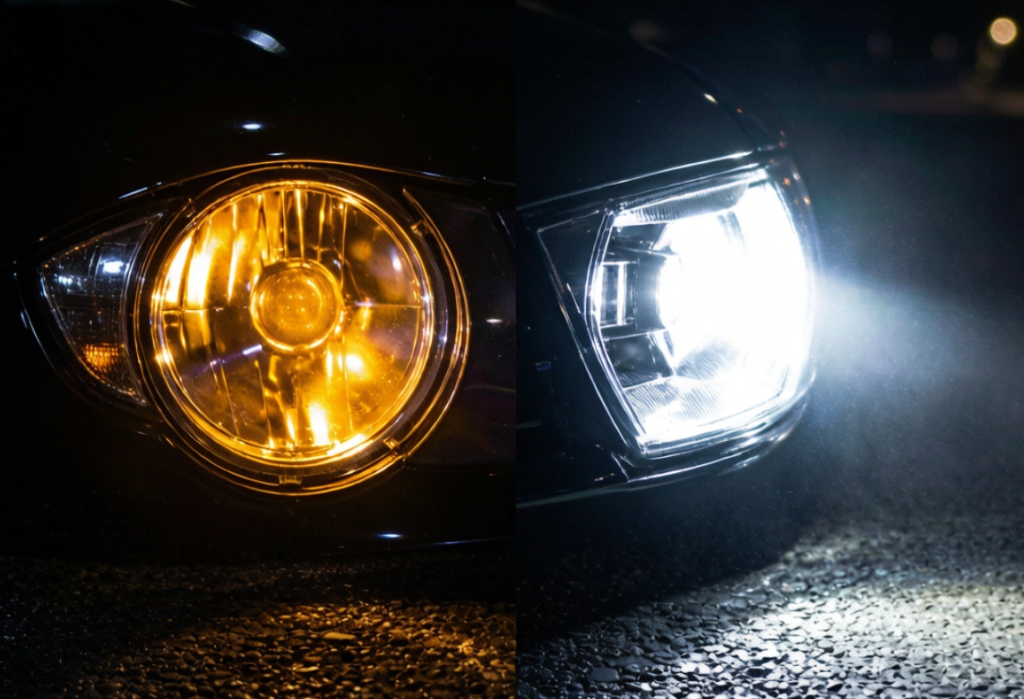
If you drive an older car — something from the 1990s, 2000s, or early 2010s — you have likely noticed the difference at night. Modern cars with bright white LED headlights illuminate the road clearly, while your factory halogen bulbs cast a dim, yellow glow that feels outdated and inadequate.
The good news: upgrading your older car to LED headlights is easier and more affordable than ever. This guide covers everything you need to know.
The Headlight Upgrade Decision
Upgrading from halogen to LED headlights is one of the most impactful modifications you can make to an older vehicle. Better visibility directly translates to safer driving, reduced eye strain, and improved nighttime confidence.
According to the Insurance Institute for Highway Safety (IIHS), vehicles with good-rated headlights are involved in 13-18% fewer nighttime crashes than those with poor-rated lighting. This statistic alone makes the upgrade conversation worth having.
Halogen Headlights Explained
Halogen bulbs have been the standard for automotive lighting since the 1960s. They work by passing electricity through a tungsten filament inside a halogen gas-filled bulb. The filament heats to over 2,500°C, producing light.
Key specs: Lumen output: 700-1,500 lm per bulb. Color temperature: 3,000-3,500K (warm yellow). Lifespan: 450-1,000 hours. Power consumption: 55-65W per bulb. Operating temperature: Very hot (250-500°C at the bulb surface).
Halogen limitation: The tungsten filament degrades over time, and the bulb dims significantly before failure. A typical halogen bulb loses 20-30% of its initial brightness over its lifespan. Most drivers do not notice this gradual dimming until they compare old bulbs against new ones side by side.
LED Headlights Explained
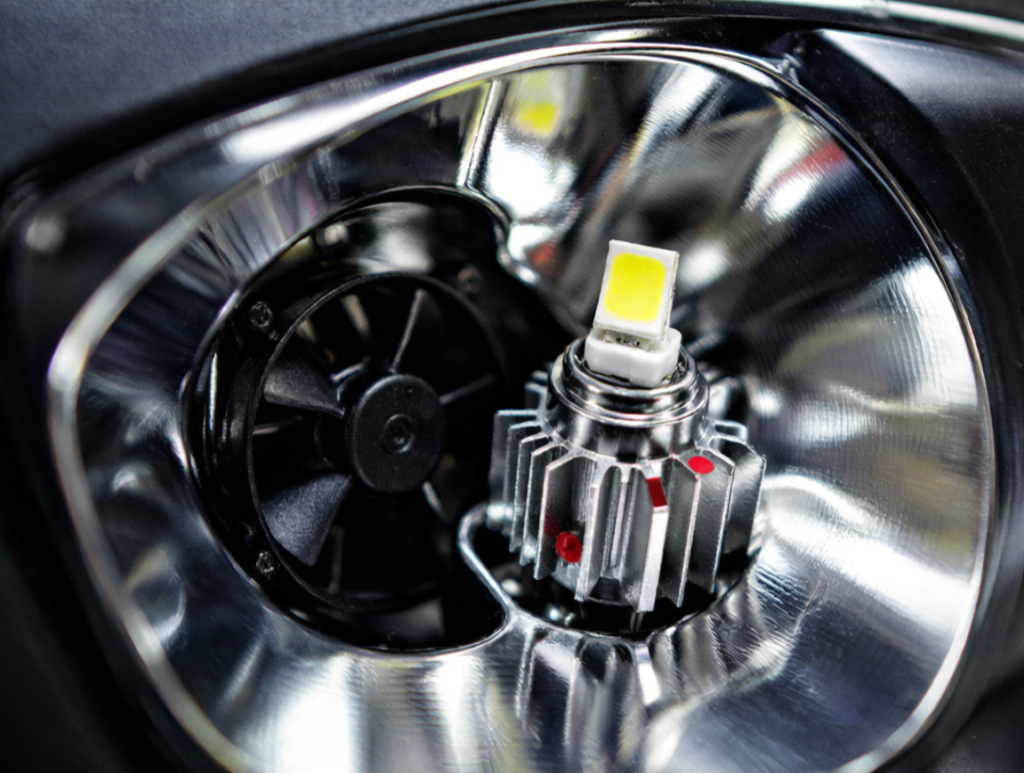
LED (Light Emitting Diode) headlights use semiconductor technology to produce light. When electricity passes through the diode, electrons release energy as photons — light. No filament to burn out, no gas to degrade.
Key specs: Lumen output: 2,000-4,000+ lm per bulb. Color temperature: 5,000-6,500K (crisp white). Lifespan: 30,000-50,000 hours. Power consumption: 20-40W per bulb. Operating temperature: Warm but manageable (60-80°C at the heatsink).
The SAE International standards for automotive LED lighting (J581, J2009) define performance requirements and test procedures for LED replacement bulbs.
Brightness & Light Output
| Metric | Halogen | LED | Improvement |
|---|---|---|---|
| Lumens per bulb | 700-1,500 | 2,000-4,000+ | 2-3x brighter |
| Color temperature | 3,000-3,500K | 5,000-6,500K | Whiter, more natural |
| Beam distance | 50-80 meters | 80-150 meters | Up to 2x further |
| Light uniformity | Even, wide pattern | Depends on housing design | Varies by bulb quality |
Real-world improvement: A quality LED headlight produces 2-3x the light output of a factory halogen. More importantly, the 5,000-6,500K color temperature provides much better contrast against dark roads, reducing eye strain during night driving by up to 40%.
Lifespan Comparison
Lifespan is where LEDs dramatically outperform halogens. A halogen bulb lasts 450-1,000 hours — roughly 1-3 years of normal driving. An LED bulb is rated for 30,000-50,000 hours — potentially the entire life of the vehicle.
Consider: if you drive 10,000 miles per year at an average of 30 mph with headlights on 20% of the time, your headlights are active for approximately 67 hours per year. A halogen bulb would need replacement every 6-12 years. An LED bulb would last 450-750 years of the same usage.
Heat & Temperature
Halogen bulbs operate at extreme temperatures — 250-500°C at the glass surface. This heat can damage headlight housings over time, causing yellowing, cracking, and reflector degradation. LEDs operate at 60-80°C at the heatsink — much cooler and far less damaging to housings.
Cost Analysis
| Cost Factor | Halogen | LED |
|---|---|---|
| Upfront cost per bulb | $5-15 | $25-80 |
| Replacement frequency | Every 1-3 years | Every 10-20+ years |
| 10-year cost (4 replacements) | $20-60 | $25-80 |
| Installation labor | $20-40 at shop | $20-40 at shop |
| Fuel cost impact | Higher (55-65W draws more alternator load) | Lower (20-40W, minor fuel savings) |
Installation & Compatibility
For most older cars, LED headlight installation is straightforward — remove the old halogen bulb and insert the LED replacement. Common bulb types for older vehicles: H4 (dual-beam), H7, 9005 (high beam), 9006 (low beam), and H1.
Potential compatibility issues: Some older vehicles with CANbus electrical systems may require anti-flicker decoders or CANbus adapters. Vehicles without CANbus (most pre-2005 models) work plug-and-play. Always confirm bulb fitment using your vehicle’s specific bulb type.
Legal Compliance
The NHTSA FMVSS 108 standard governs automotive lighting in the United States. In Europe, ECE R37 and R112 regulate replaceable bulb systems. In recent years, many jurisdictions have updated regulations to accommodate LED replacement bulbs that meet specified beam pattern and intensity requirements.
Important: Not all LED bulbs are road-legal. When purchasing LED headlights, look for bulbs that explicitly state DOT (US) or ECE (Europe) compliance. Avoid extremely cheap bulbs that may produce unsafe glare or poor beam patterns.
Special Considerations for Older Cars
- Reflector vs projector housings: Older cars typically use reflector housings designed for halogen bulbs. LED bulbs in reflector housings may produce a different beam pattern. Quality LED bulbs with precise emitter positioning (matching the halogen filament position) minimize this issue.
- Adjusters: Corroded or seized headlight adjusters are common on older vehicles. Before installing LEDs, ensure your adjusters work so you can aim the lights properly.
- Wiring harness: Check the condition of the headlight wiring harness. 20+ year-old wiring may have voltage drop that reduces LED brightness. A relay harness ($15-30) often improves performance.
Side-by-Side Comparison Table
| Factor | Halogen | LED |
|---|---|---|
| Brightness (lumens) | 700-1,500 | 2,000-4,000+ |
| Color temperature | 3,000-3,500K | 5,000-6,500K |
| Lifespan | 450-1,000 hours | 30,000-50,000 hours |
| Power consumption | 55-65W | 20-40W |
| Operating temperature | 250-500°C | 60-80°C |
| Upfront cost | $5-15 | $25-80 |
| Installation difficulty | Easy | Easy to moderate |
| Road legality | Universal | Check local regulations |
Which Should You Choose?
Choose halogen if: Budget is the primary concern, you need bulbs immediately and have access only to local auto parts stores, or your vehicle has unique electrical issues that make LED installation complex.
Choose LED if: You want the best visibility and safety, plan to keep the vehicle for more than 2-3 years, drive frequently at night, or want modern lighting performance without buying a new car.
Upgrade Your Older Car with TUHO LED Solutions
Ready to upgrade your older car’s headlights? TUHO Lighting offers a complete range of plug-and-play LED headlight bulbs designed for older vehicles. Our bulbs feature precise emitter positioning for optimal beam patterns in halogen reflectors, built-in anti-flicker drivers, and robust thermal management systems. Available in H1, H4, H7, 9005, 9006, and more.OEM/ODM inquiries: Contact our sales team
FAQ
Can I install LED headlights in my 1990s car?
Yes. Most 1990s and 2000s vehicles with standard H4, H7, or 9005/9006 bulb types can accept direct-fit LED replacement bulbs.
Are LEDs brighter than halogens?
Yes — 2-3x brighter in terms of lumens, with much better color rendering that improves contrast.
Do LEDs last longer?
Yes — 30,000-50,000 hours vs 450-1,000 hours for halogen. LEDs can outlast the vehicle.
Do I need a conversion kit?
Some CANbus-equipped vehicles need an anti-flicker decoder. Most pre-2005 vehicles are plug-and-play.
Are LED headlights legal?
In most US states and many other jurisdictions, yes — if the bulbs meet DOT or ECE standards. Always verify.
Conclusion
Upgrading from halogen to LED headlights is one of the most effective and satisfying improvements you can make to an older car. The benefits — dramatically better visibility, longer lifespan, lower power consumption, and modern appearance — far outweigh the modest upfront cost difference. With plug-and-play LED kits available for virtually every bulb type, there has never been a better time to make the switch.