 跳至内容
跳至内容 
Walk into any auto parts store and you will see headlights labeled 3000K, 5000K, 6000K, 8000K, even 10000K. What do these numbers mean? And which one is best for your vehicle?
Color temperature is one of the most misunderstood specifications in automotive lighting. Many people assume higher K means better — but the reality is more nuanced.
What Is Color Temperature?
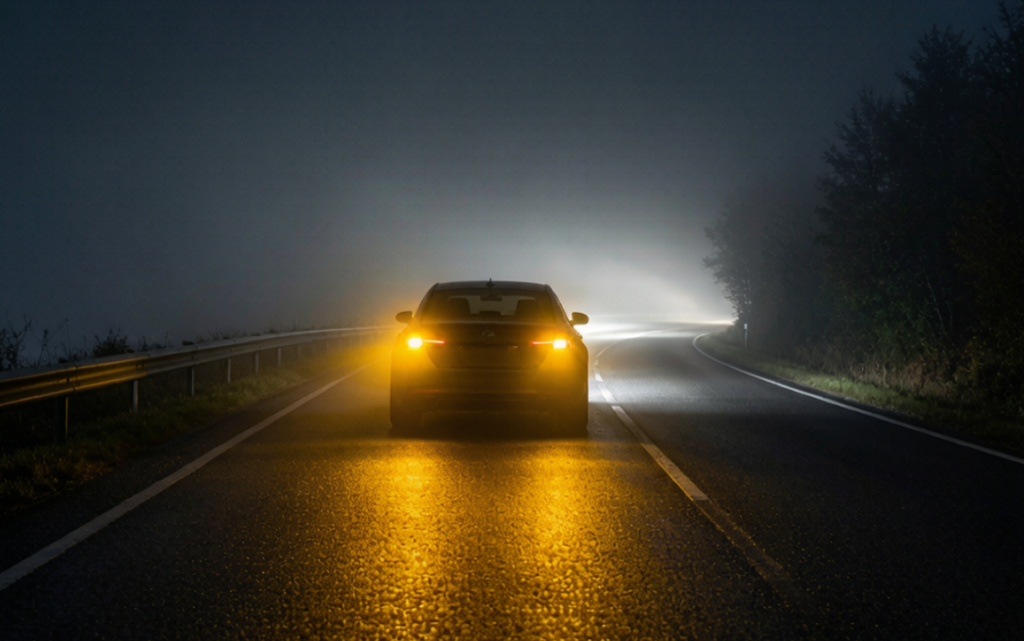
Color temperature, measured in Kelvin (K), describes the visual appearance of light — whether it looks yellow, white, or blue. Contrary to what the name suggests, higher Kelvin does not mean “hotter” light — it means “cooler” (more blue) in terms of visual color.
The SAE International standards recognize specific color temperature ranges for automotive forward lighting, with most production vehicles using 4,000-6,000K.
Kelvin Scale Explained
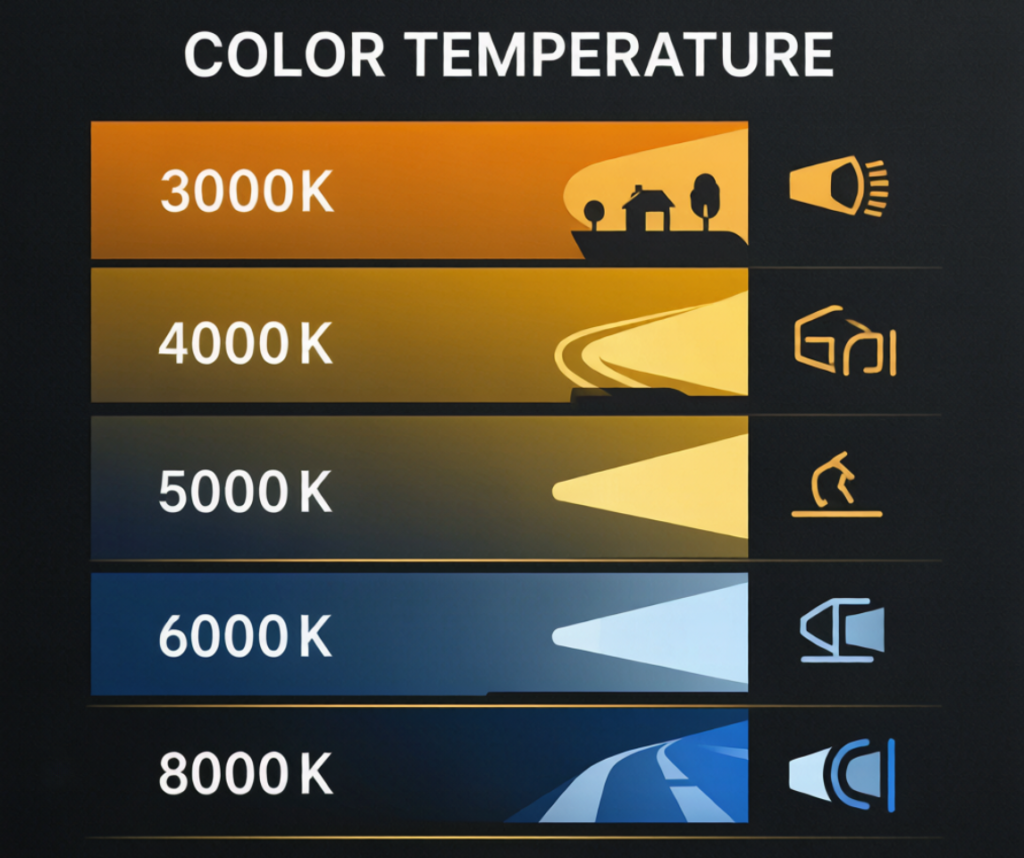
Key concept: Lower K = yellower light (3,000K). Mid K = warm white (4,300K). Higher K = cool white to blue (6,000K+). The most usable light for driving is between 4,300K and 6,500K — matching natural daylight.
3000K — Yellow/Golden Light
Best for: Fog lights, adverse weather. 3000K yellow light has the least glare in fog, rain, and snow. Yellow wavelengths scatter less in water particles, reducing back-glare. This is why fog lights have traditionally used yellow or selective-yellow lenses.
Limitations: Lower overall brightness perception, less contrast on clear nights, may look dated compared to modern white headlights.
4300K — Warm White
Standard for many OEM HID (xenon) systems. Provides a comfortable warm-white light with excellent color rendering. Good all-around balance between fog performance and clear-night visibility.
5000K — Pure White
Best overall balance: 5000K is the closest to natural midday sunlight (approximately 5,500K). It provides the best color rendering, allowing you to see road signs, lane markings, and obstacles with maximum contrast. Our recommended choice for primary headlights.
6000K — Daylight White
6000K is the most popular aftermarket headlight color. It appears slightly cooler (more white-blue) than 5000K but still within the daylight range. Very slight blue tint gives a modern, premium appearance. Excellent contrast on clear nights.
8000K+ — Blue/Purple (Aesthetic)
8000K and above produces distinctly blue or purple light. These are purely aesthetic — they produce less usable light for driving. The human eye is less sensitive to blue wavelengths at night, reducing perceived brightness and detail resolution.
Weather Performance by Color
| Color Temp | Clear Night | Rain | Fog | Snow |
|---|---|---|---|---|
| 3,000K (yellow) | Fair | Good | Excellent | Good |
| 4,300K (warm white) | Good | Good | Good | Good |
| 5,000-6,000K (cool white) | Excellent | Good | Fair | Good |
| 8,000K+ (blue) | Poor | Poor | Poor | Poor |
Visibility & Eye Strain
Research from the IIHS headlight evaluation program shows that headlight color temperature directly affects driver visual performance. Light in the 5,000-6,500K range provides the best contrast sensitivity because it matches the color temperature our eyes evolved to see under — daylight.
Legal Considerations
Most jurisdictions regulate headlight color by appearance — typically requiring white or amber light visible from the front. Blue or purple headlights are illegal in most states and countries. The NHTSA FMVSS 108 specifies that headlights must emit white light, which is defined as having a color temperature between 4,000K and 6,500K in most interpretations.
Our Recommendation
Primary headlights (high/low beam): 5,000-6,500K offers the best balance of visibility, aesthetics, and legal compliance. Fog lights: 3,000K yellow provides the best performance in adverse weather. Avoid: 8,000K+ blue/purple — reduced visibility and legal issues.
Find Your Perfect Color Temperature with TUHO
Looking for the perfect headlight color temperature? TUHO Lighting offers LED headlights in multiple color temperature options — from 3000K yellow fog lights to 5000K pure white and 6000K daylight headlights. All bulbs meet DOT compliance standards and deliver consistent beam patterns.Need custom solutions? Contact us for OEM/ODM
FAQ
Best color for headlights?
5,000-6,500K — optimal visibility, natural daylight color, legal compliance.
Is 6000K legal?
Yes in most jurisdictions if the beam pattern meets DOT/ECE standards.
Is yellow light better in fog?
Yes. 3000K scatters less in fog, reducing back-glare.
What does K mean?
Kelvin — unit measuring the visual color appearance of light.
Are 8000K+ headlights better?
No — they produce less usable light and are often illegal. Avoid blue/purple bulbs.
Conclusion
Color temperature is a matter of function, not just fashion. For primary headlights, 5,000-6,500K delivers the best visibility and eye comfort. Yellow 3,000K light is superior for fog lights. Avoid extreme blue colors — they look distinctive but compromise safety. Choose your headlight color based on how and where you drive.