 跳至内容
跳至内容 
Daytime Running Lights (DRLs) have become a standard feature on modern vehicles, but many drivers are unsure exactly what they do — and whether they eliminate the need for headlights. Understanding the difference is essential for both safety and legal compliance.
Visibility Technology Explained
Modern vehicles use multiple lighting systems for different purposes. DRLs, headlights, taillights, and fog lights each serve distinct functions, and they are not interchangeable. The NHTSA FMVSS 108 defines the specific requirements for each lighting system on vehicles sold in the United States.
What Are DRLs?
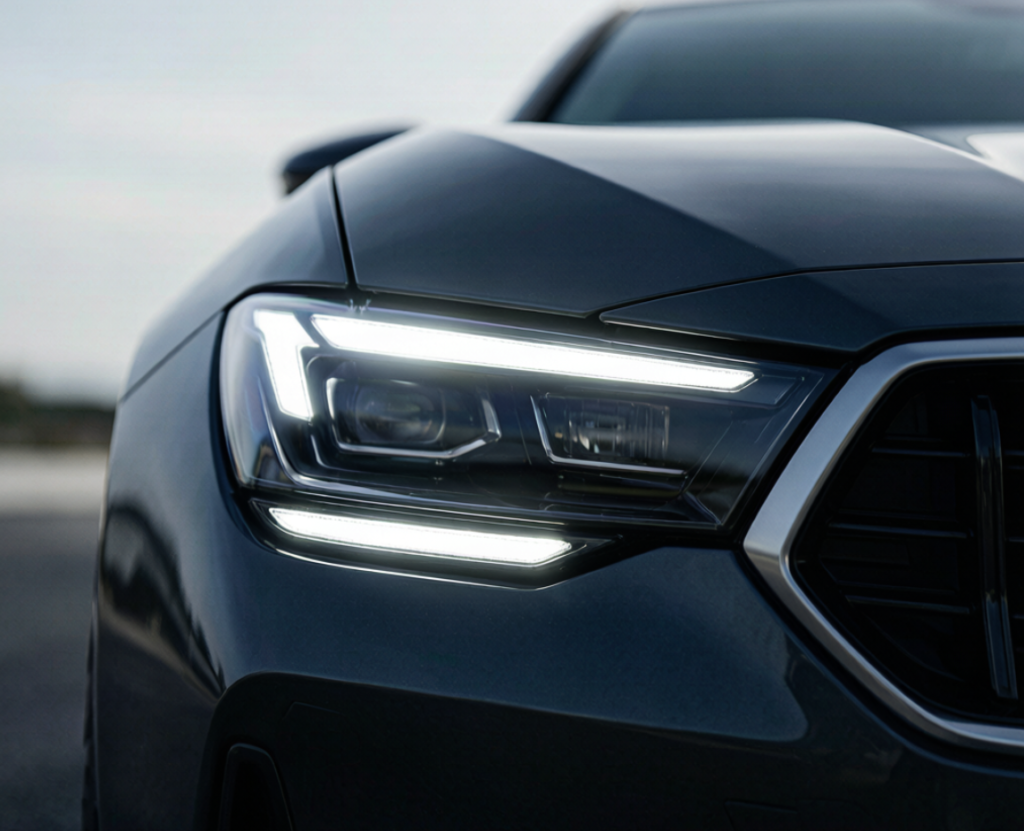
Daytime Running Lights (DRLs) are low-intensity lights that automatically turn on when the vehicle is running and the headlights are off. Their sole purpose is to make your vehicle more visible to other road users during daylight hours. They do NOT illuminate the road ahead.
DRL key characteristics: Brightness: 400-1,200 candela (vs 20,000-40,000 for low beams). Typical power: 5-15W (LED). Purpose: Conspicuity — being seen by others. Road illumination: None — DRLs provide zero forward visibility for the driver.
What Are Headlights?
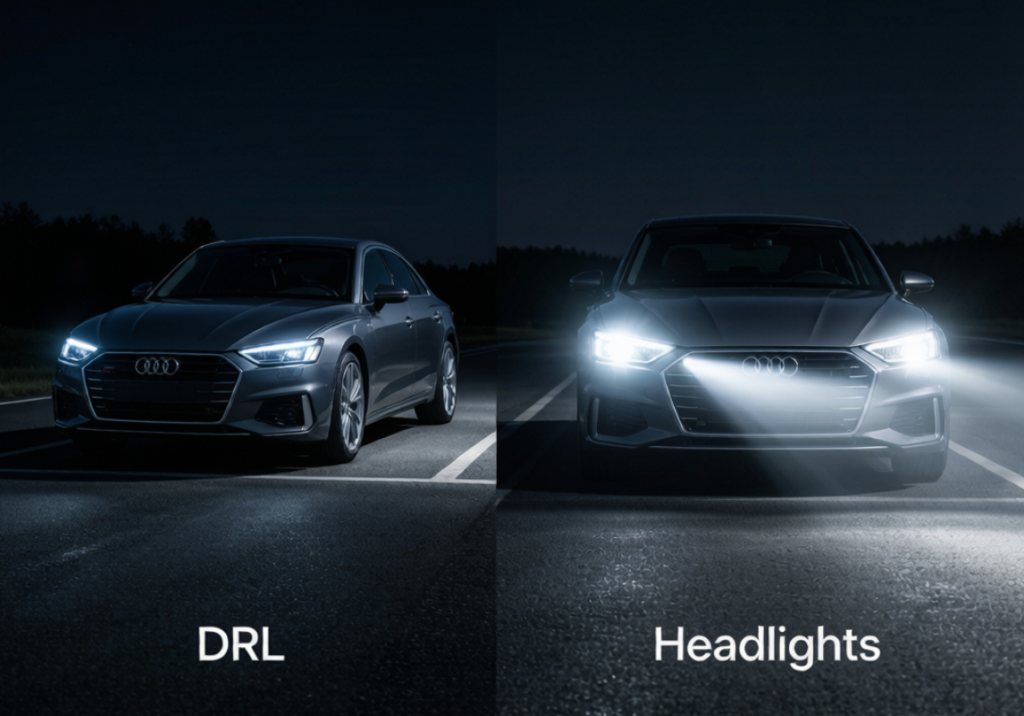
Headlights (low beam and high beam) are designed to illuminate the road ahead for the driver to see. Low beams provide controlled forward lighting without blinding oncoming traffic. High beams provide maximum illumination when no other vehicles are present.
Headlight key characteristics: Low beam output: 700-2,000 lumens. High beam output: 1,200-4,000+ lumens. Purpose: Illumination — enabling the driver to see ahead. Road illumination: Essential — the driver depends on headlights to navigate.
Purpose & Function
| Feature | DRLs | Headlights (Low Beam) |
|---|---|---|
| Primary purpose | Be seen by others | See the road ahead |
| When to use | Daytime only | Night, dusk, dawn, tunnels, rain |
| Auto mode? | Yes (ignition controlled) | Manual or auto sensor |
| Road illumination | None | Essential |
Brightness Comparison
DRLs are intentionally much dimmer than headlights — approximately 5-10% of the intensity. This prevents glare to oncoming drivers while still making your vehicle visible from a distance. A typical LED DRL produces 50-200 lumens per light, compared to 700-2,000 for low beams.
Legal Requirements
DRLs became mandatory in the European Union in 2011 and in Canada since 1990. The US does not mandate DRLs, but they are offered on most modern vehicles. Crucially, DRLs alone do not satisfy nighttime headlight requirements in any jurisdiction. You must turn on your headlights after dark regardless of DRL presence.
Energy Consumption
LED DRLs consume just 5-15W, compared to 20-40W for LED headlights or 55-65W for halogen headlights. This low energy draw means DRLs can operate whenever the engine is running without significantly affecting fuel economy.
Safety Impact
Studies from the IIHS (Insurance Institute for Highway Safety) show that vehicles with DRLs are involved in 5-10% fewer daytime multi-vehicle collisions. The effect is strongest in twilight conditions and adverse weather where contrast is reduced.
Design & Styling
Modern LED DRLs have become a key styling element for automakers — think Audi’s signature LED strips, BMW’s corona rings, or Volvo’s Thor’s Hammer design. These signature light signatures make vehicles instantly recognizable and have elevated DRLs from safety feature to brand identity element.
Aftermarket DRL Options
For vehicles without factory DRLs, aftermarket LED DRL kits are widely available. These typically mount in the lower bumper or grille area and connect to an ignition-switched circuit. Most kits include a controller that automatically dims the DRLs when headlights are on. Quality kits from manufacturers like TUHO feature weatherproof construction and precise light distribution.
Upgrade Your Lighting with TUHO
Enhance your vehicle’s visibility and style with TUHO LED lighting solutions. Whether you need replacement DRL modules, LED headlight upgrades, or complete lighting kits, TUHO offers quality products designed for durability and performance. All products meet international compliance standards.Request OEM/ODM Quote
FAQ
DRLs vs headlights difference?
DRLs = daytime conspicuity only, no road illumination. Headlights = nighttime road illumination.
Can DRLs replace headlights at night?
No. DRLs do not illuminate the road. Illegal and dangerous to drive with DRLs alone at night.
Are LED DRLs better than halogen?
Yes — brighter, more efficient, longer lasting, cleaner white light.
Are DRLs mandatory?
In EU (since 2011) and Canada (since 1990). Not federally mandated in the US but standard on most new cars.
Can I add DRLs to my older car?
Yes — aftermarket LED DRL kits are available for most vehicles with basic wiring installation.
Conclusion
DRLs and headlights serve different but complementary purposes. DRLs make you visible to others during the day. Headlights let you see the road at night. Both are essential for complete vehicle safety. If your vehicle lacks DRLs, an aftermarket LED DRL kit is a worthwhile safety upgrade that also enhances your vehicle’s appearance.