LED headlights are famous for their long lifespan, but how long do they actually last in real-world conditions? TUHO Lighting manufactures high-quality LED headlights engineered for maximum longevity and performance.
The Lifespan Promise
Quality LED headlights are rated for 30,000-50,000 hours of operation. This translates to 15-25 years of average nighttime driving (2-3 hours per night). In practice, many factors affect actual lifespan. The Wikipedia article on LED lamps explains the L70 rating system used to measure LED lifespan: the time until light output drops to 70% of original brightness.
Rated vs Actual Lifespan
Rated lifespan (L70): The time until an LED produces 70% of its original brightness. For quality LEDs, this is 30,000-50,000 hours. Actual lifespan in automotive use: typically 10,000-30,000 hours before noticeable dimming or failure. The discrepancy is due to heat, vibration, and voltage variations that are less controlled in automotive environments compared to laboratory testing conditions. TUHO LED headlights are tested under real-world automotive conditions.
Factors Affecting Lifespan
Heat is the #1 enemy of LED lifespan. Excessive heat causes LED chips to degrade faster. Voltage fluctuations from the vehicle’s electrical system can stress LED drivers. Vibration from rough roads can damage internal connections. Moisture ingress through poor sealing causes corrosion. Quality of components determines how well an LED system withstands these factors.
Heat Management
| Cooling Method | Effectiveness | Common In |
|---|---|---|
| Passive (aluminum heatsink) | Good for lower power | Budget to mid-range LEDs |
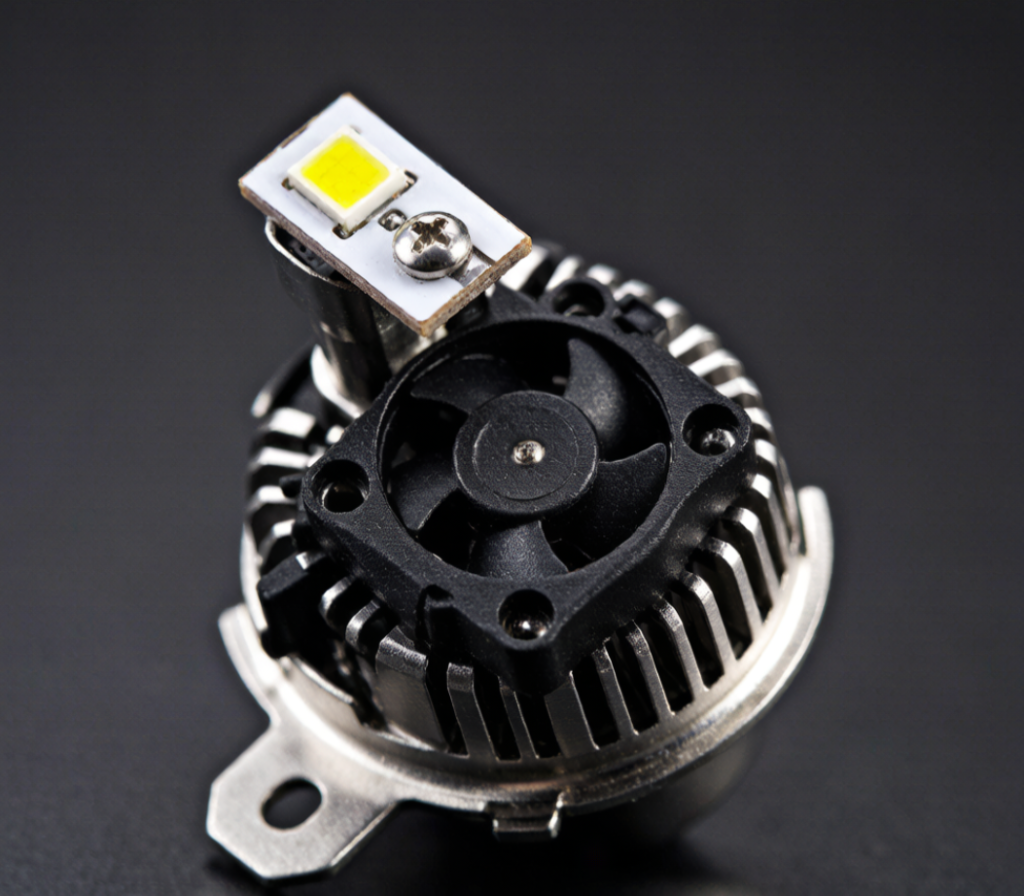
| Active (built-in fan) | Excellent | Premium LED headlights |
| Copper braid + heatsink | Excellent | High-power LEDs |
| Passive only (no heatsink) | Poor | Lowest quality LEDs |
LED Chip Quality
LED chips from top manufacturers (CREE, Philips, Osram, Samsung) are rigorously tested and binned for consistent performance. They typically meet or exceed their rated lifespan. Generic unbranded LED chips may have actual lifespans 50-70% shorter than claimed. When choosing LED headlights, the LED chip brand is as important as the bulb brand. TUHO uses premium LED chips from leading manufacturers.
LED Driver Importance
The LED driver (also called the constant current source) regulates power to the LED chips. A quality driver maintains stable current despite voltage fluctuations from 9-16V. Poor drivers can fail prematurely, causing the entire LED bulb to stop working even if the LED chips are still functional. Look for LED headlights with potted (encapsulated) drivers for maximum moisture and vibration resistance.
LED vs Halogen vs HID Lifespan
| Type | Rated Lifespan | Typical Actual Life | Replacement Frequency |
|---|---|---|---|
| Halogen | 500-1,000 hrs | 500-1,500 hrs | Every 1-3 years |
| HID (Xenon) | 2,000-3,000 hrs | 2,000-5,000 hrs | Every 3-5 years |
| Budget LED | 10,000-20,000 hrs | 5,000-15,000 hrs | Every 3-8 years |
| Premium LED | 30,000-50,000 hrs | 20,000-40,000 hrs | 10-20+ years |
Signs of LED Failure
Dimming — the light becomes gradually less bright over time. Color shift — the color temperature changes (often becomes bluer or pinkish). Flickering — the light flickers or strobes intermittently. Complete failure — the LED stops working entirely. Most LEDs do not fail suddenly like halogen bulbs. Dimming and color shift are early warning signs that replacement is needed.
How to Maximize LED Life
Choose LEDs with active cooling (built-in fans) for high-power applications. Ensure LED bulbs fit properly in the headlight housing with adequate ventilation. Use Canbus-compatible LEDs that regulate voltage properly. Keep headlight housings clean and sealed to prevent moisture ingress. Consider upgrading to TUHO premium LED headlights with advanced thermal management for maximum lifespan.
FAQ
Do LED headlights really last 50,000 hours?
Premium LEDs can achieve 30,000-50,000 hours under ideal conditions. Real-world automotive use typically yields 20,000-40,000 hours.
What causes LED headlights to fail?
Heat, voltage fluctuations, poor driver quality, vibration, and moisture ingress are the most common causes of LED headlight failure.
Do LED headlights dim over time?
Yes, LEDs gradually dim as they age. The L70 rating indicates when output drops to 70% of original brightness.
How can I tell if my LED headlights are failing?
Look for dimming, color shift, flickering, or complete failure. Dimming and color shift appear before complete failure.
Long-Lasting LED Headlights from TUHO
TUHO LED headlights are engineered for maximum lifespan. Premium LED chips, advanced thermal management, and robust drivers. Explore our LED headlight range or contact us for technical specifications.