Daytime Running Lights (DRLs) and low beam headlights serve different purposes but are often confused. Understanding the difference helps you use your vehicle’s lighting correctly and legally. TUHO Lighting manufactures LED headlights and DRL systems for modern vehicles.
What Are DRLs and Low Beams?
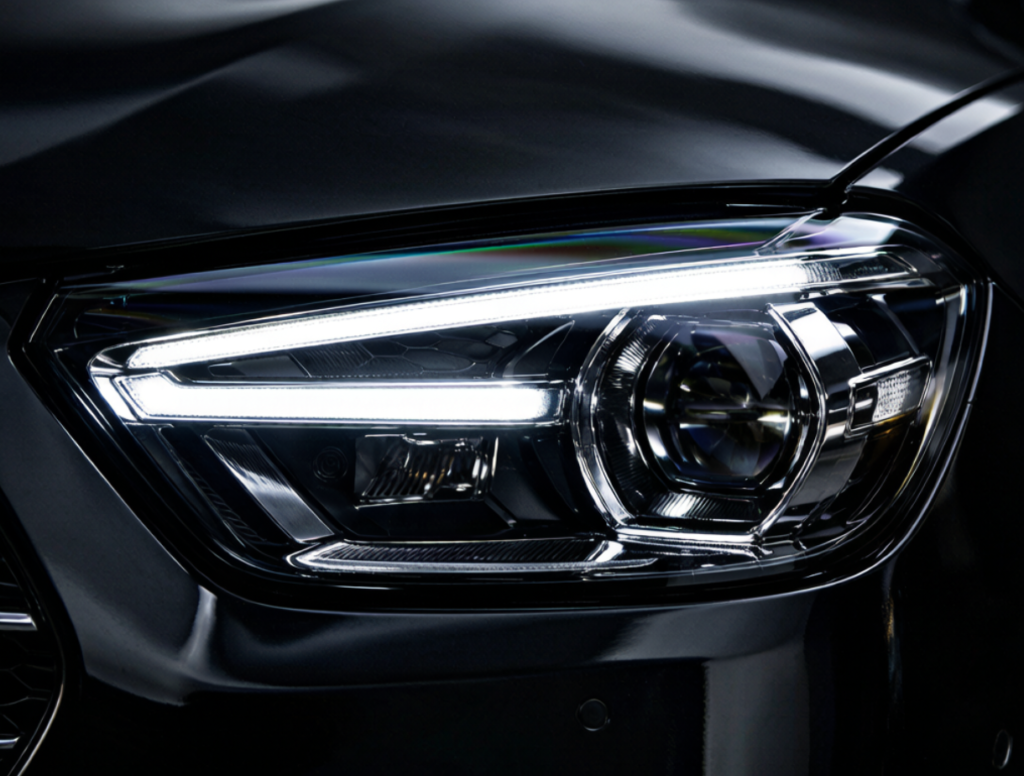
DRLs are automatic lights that turn on when the vehicle is running to increase visibility to other road users. Low beams are the primary forward-facing headlights used for night driving, providing illumination of the road ahead. The Wikipedia article on daytime running lamps explains their history and regulatory adoption across different countries.
DRL Explained
Daytime Running Lights (DRLs) are designed to make your vehicle more visible to others, not to illuminate the road: They automatically activate when the engine is running. They are typically lower intensity than low beams, producing 400-1,200 lumens. DRLs are mandatory in many countries including Canada, the EU (since 2011), and increasingly adopted worldwide. They can be separate light units or use reduced-power high beams. TUHO’s LED DRL systems offer bright, energy-efficient daytime visibility.
Low Beam Explained
Low beams are designed to illuminate the road ahead without blinding oncoming traffic. They produce 700-1,500 lumens for halogen or 3,000-6,000 lumens for LED. Low beams have a controlled beam pattern with a sharp cutoff to prevent glare. They must be manually turned on (or set to auto) and are required by law at night and in low visibility conditions such as rain, fog, or dusk.
Brightness Comparison
| Feature | DRL | Low Beam (Halogen) | Low Beam (LED) |
|---|---|---|---|
| Typical brightness | 400-1,200 lm | 700-1,500 lm | 3,000-6,000 lm |
| Purpose | Visibility to others | Road illumination | Road illumination |
| Beam pattern | Diffuse/wide | Focused with cutoff | Focused with cutoff |
| Power consumption | 10-30W | 55-65W | 20-40W |
Legal Requirements
In the European Union, DRLs have been mandatory on all new cars since 2011. Canada requires DRLs on all vehicles since 1990. The US does not mandate DRLs but allows them. Low beams are required by law in all jurisdictions when driving at night, in rain, snow, or fog. The NHTSA regulations govern automotive lighting standards in the United States.
When to Use Each
Use DRLs during daylight hours — they automatically activate for visibility. Switch to low beams at night, in tunnels, during heavy rain, fog, snowfall, or any time visibility is reduced. Do not use DRLs alone at night — they do not provide sufficient road illumination. DRLs also typically do not activate tail lights, so your vehicle may not be visible from behind at night with only DRLs on. Learn more about proper automotive lighting usage from TUHO.
DRL and Low Beam in LED Systems
Modern vehicles increasingly use LED technology for both DRLs and low beams. LED DRLs offer brighter, more energy-efficient daytime visibility with distinctive styling. LED low beams provide superior road illumination with lower power consumption than halogen. Some aftermarket LED headlights, like those from TUHO, combine DRL and low beam functions in a single integrated unit.
Upgrading DRLs to LED
Many older vehicles with halogen DRLs can be upgraded to LED for better visibility and modern appearance. Check that LED DRL bulbs are Canbus-compatible and properly decoded for your vehicle. LED DRLs typically last 30,000+ hours. TUHO offers LED upgrade kits for both DRL and low beam lights with Canbus compatibility.
Comparison Table
| Feature | DRL | Low Beam |
|---|---|---|
| Purpose | Be seen by others | See the road |
| Activation | Automatic with engine | Manual or auto headlight |
| Brightness | 400-1,200 lm | 700-6,000 lm (LED) |
| Night use | Insufficient alone | Required by law |
| Tail lights on | Typically no | Yes |
| Mandatory | In EU, Canada | Everywhere at night |
FAQ
Are DRLs the same as low beams?
No. DRLs increase your vehicle’s visibility to others during the day. Low beams illuminate the road ahead at night.
Can I drive at night with just DRLs?
No. DRLs do not provide sufficient road illumination and typically do not activate tail lights. Always use low beams at night.
Are DRLs required by law?
Yes in the EU (since 2011) and Canada (since 1990). Optional but allowed in the US.
Can I upgrade my DRLs to LED?
Yes, LED DRL upgrades are popular for better brightness and modern styling. Ensure Canbus compatibility for your vehicle.
LED DRL and Headlight Solutions from TUHO
TUHO Lighting offers premium LED DRL systems and low beam headlights. Energy-efficient, long-lasting, and designed for optimal performance. Browse our lighting solutions or contact us for OEM/ODM inquiries.