 跳至内容
跳至内容 
Headlight brightness is measured in several ways — and marketing numbers rarely match real-world visibility. This guide explains the metrics and provides a practical comparison chart. TUHO Lighting manufactures high-power LED headlight bulbs with verified output.
What “Brightness” Really Means
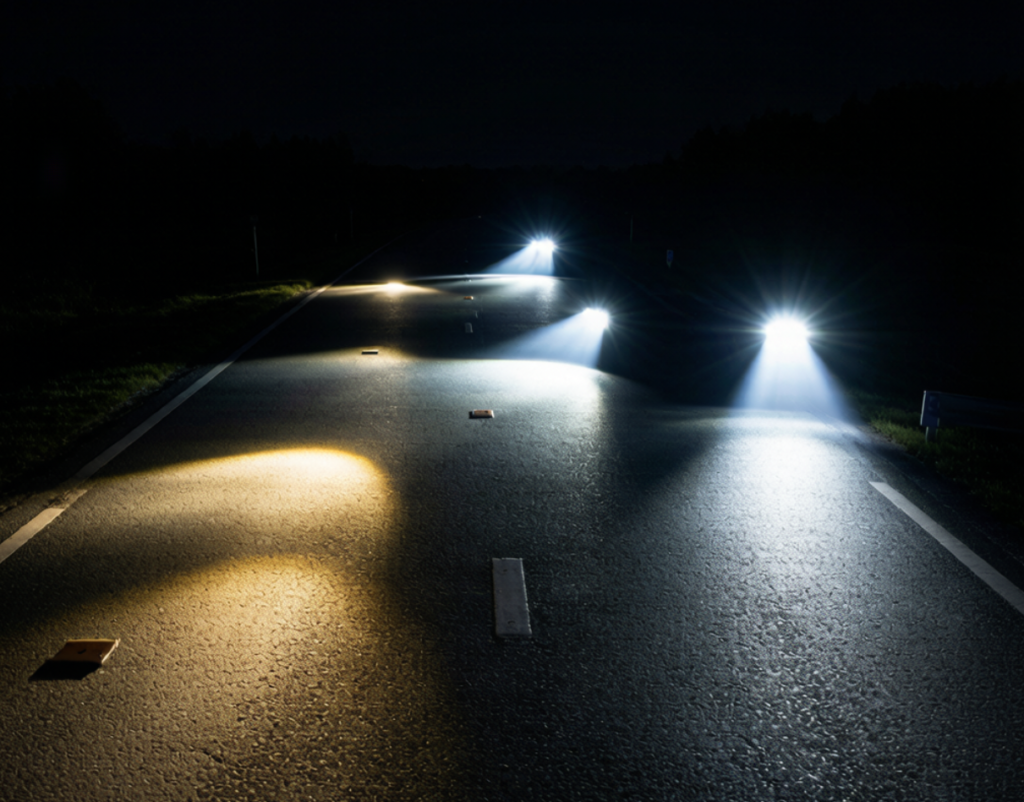
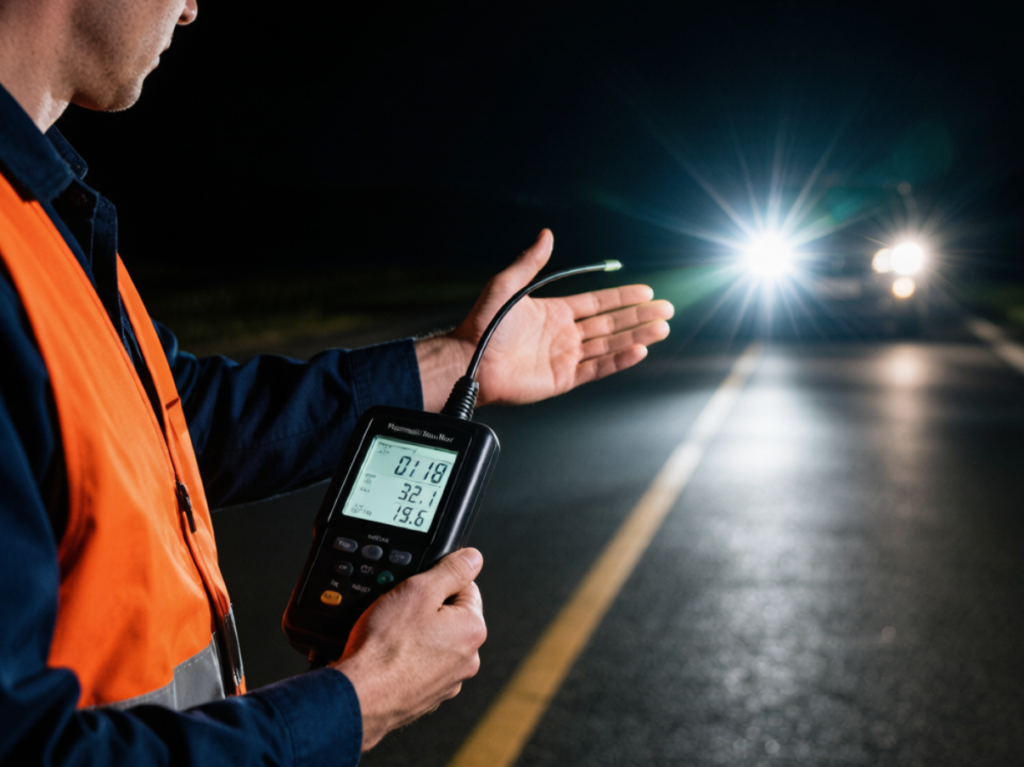
When manufacturers say “bright,” they may mean lumens, lux, candela, or simply marketing. The lumen measures total light output; lux measures light on a surface; candela measures intensity in a direction. For headlights, what matters most is where the light lands on the road — lux at distance and beam pattern quality. A bulb with high lumens but poor focus can underperform a focused bulb with fewer lumens.
Lumens vs Lux vs Candela
| Metric | Measures | Relevance to Headlights |
|---|---|---|
| Lumens (lm) | Total light output | Overall power indicator |
| Lux (lx) | Illuminance at a surface | How much light hits the road |
| Candela (cd) | Intensity in one direction | Beam focus and reach |
Brightness Comparison Chart
Typical output (per bulb, quality products): Halogen 1,000-1,500 lm · HID 2,800-3,500 lm · LED 3,000-6,000 lm. In real-world lux at 25 m, quality LED typically delivers 2-3x the road illumination of halogen, with HID between them. These figures are for genuine, thermally stable products — cheap “50,000 lm” claims are inflated marketing.
| Technology | Typical Lumens | Color Temp | Lifespan | Wattage |
|---|---|---|---|---|
| Halogen | 1,000-1,500 lm | ~3,200K | 300-1,000 hrs | 55W |
| HID/Xenon | 2,800-3,500 lm | 4,300-6,000K | 2,000-3,000 hrs | 35W + ballast |
| LED (quality) | 3,000-6,000+ lm | 5,000-6,500K | 30,000-50,000 hrs | 15-30W |
Halogen Baseline
Halogen is the reference point for brightness comparisons. It produces warm 3,200K light with 1,000-1,500 lumens per bulb — adequate but limited. Its beam is broad and softer, with a visible yellow cast. Halogen’s weakness is not just output: the filament dims as it ages, so a 2-year-old halogen bulb delivers noticeably less light than a new one. Most drivers accept halogen as “good enough” until they experience LED.
HID Performance
HID delivers 2-3x halogen’s output with a whiter, more modern color. In projector housings, HID produces excellent beam focus and long-range illumination. However, HID has a warm-up delay (2-5 seconds to full brightness), requires a ballast, and its light output declines over its 2,000-3,000 hour life. HID remains a strong performer, but its practical advantages over quality LED have narrowed significantly.
LED Performance
Quality LED headlights deliver 3,000-6,000+ lumens per pair with instant full output, crisp white color (5,000-6,500K), and 30,000-50,000 hour lifespans. The key caveat: sustained brightness depends on thermal management. A well-cooled LED holds ~90% output; an overheated one dims. LED also offers the best energy efficiency — more light per watt than any other technology. TUHO’s LED headlight bulbs combine high output with validated cooling for sustained performance.
Real-World Visibility vs Paper Specs
Paper lumens do not equal road visibility. Three factors dominate: thermal stability (does brightness hold after 30 minutes?), beam focus (is light concentrated on the road?), and color quality (does 5,500K improve contrast?). A 4,000-lm bulb with poor focus can illuminate less road than a 3,000-lm focused bulb. When comparing products, look for tested lux-at-distance values and beam pattern photos — not just headline lumens.
Beam Distance and Pattern
Quality low beams project a defined cutoff — bright on the driver’s side of the road, cut off to avoid glare on oncoming lanes. Beam reach depends on focus and intensity. HID and LED in proper housings reach 150-250 meters of usable illumination versus 80-120 meters for halogen. A sharp, controlled beam pattern is both a safety and a legal requirement. Poorly focused LED upgrades are the leading cause of glare complaints.
Choosing by Brightness Needs
- City driving, short commutes: quality LED entry models are more than sufficient
- Highway and rural driving: high-output LED with strong beam focus
- Max range priority: premium LED or HID in projector housings
- Budget immediate replacement: halogen remains acceptable but offers least value over time
For most drivers, a quality LED upgrade delivers the best real-world brightness per dollar — and it is the technology TUHO engineers across its plug-and-play headlight range.
FAQ
How many lumens is a good LED headlight?
Quality LED headlight bulbs deliver 3,000-6,000 lumens per pair in real terms. Claims of 10,000+ lumens per bulb from a 25W design are marketing inflation.
What is brighter: LED or HID?
Quality LED is comparable to or brighter than HID, with better efficiency and lifespan. HID retains an edge only in specific projector retrofit scenarios.
Does a higher lumen count mean better visibility?
Not necessarily. Beam focus, thermal stability, and color quality matter as much as total lumens. A focused 3,000-lm beam can outperform a scattered 5,000-lm one.
What color temperature is brightest for headlights?
5,000-6,500K appears brightest to the human eye and improves contrast. Higher (8,000K+) bluer light actually performs worse in rain and fog.
Brightness You Can Trust — From TUHO
TUHO Lighting manufactures LED headlights with verified output, stable cooling, and clean beam patterns. For distributors and brands, we deliver brightness that performs — not just spec sheets. Explore our LED headlights or contact us for sourcing and testing data.