 跳至内容
跳至内容 
LED turn signals are brighter, faster-responding, and last far longer than halogen — but they often trigger “hyper flash” that confuses drivers. This guide explains the problem and the fix. TUHO Lighting manufactures LED turn signal bulbs designed to minimize compatibility headaches.
Why Drivers Switch to LED Turn Signals
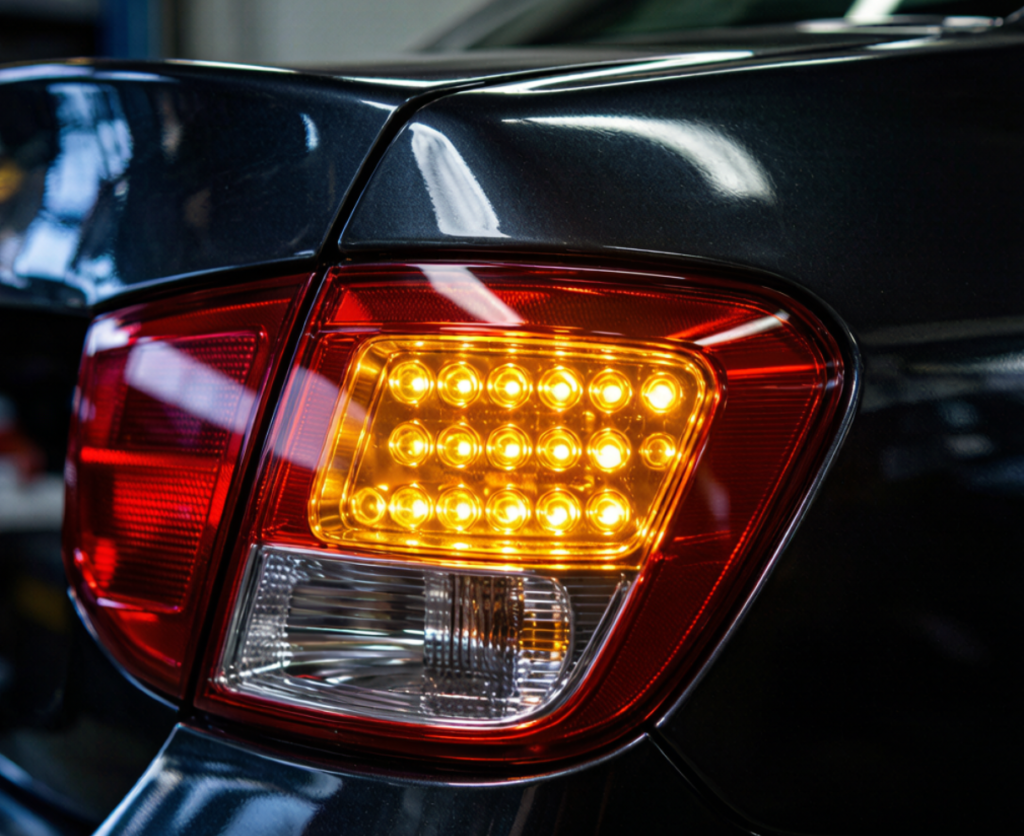
LED turn signals offer three clear advantages: instant response (no warm-up delay), higher brightness and visibility, and a lifespan measured in tens of thousands of hours versus hundreds for halogen. They also look cleaner and more modern. The automotive lighting evolution has made LED standard on new vehicles. For older cars, LED upgrades are a popular DIY improvement — with one common catch: hyper flash.
How Halogen Turn Signals Work
Halogen turn signals use a tungsten filament and draw significant current — typically 21W per bulb (about 1.75A at 12V). The vehicle’s flasher relay detects this current draw to time the blinking rate (typically 60-120 blinks per minute). The relay assumes a specific load and adjusts flash speed accordingly. This load-based timing is the root of the LED compatibility problem.
How LED Turn Signals Work
LED turn signals draw a fraction of the current of halogen — typically 2-5W versus 21W. This low power draw is great for efficiency but confuses the flasher relay. The relay interprets the low current as a burned-out bulb and speeds up the flash rate to warn the driver. The result: the LED blinks rapidly — hyper flash. It is not a defect in the LED; it is a signal from the relay.
What Is Hyper Flash?
Hyper flash (also called fast flash) is when turn signals blink much faster than normal — often 2-4x the standard rate. It can also cause the indicator light in the dashboard to behave erratically. While not inherently dangerous, hyper flash is annoying, can be mistaken for a malfunction, and in some regions is a technical inspection failure. It is the single most common issue reported after LED turn signal installation.
Why Hyper Flash Happens
Hyper flash happens because the flasher relay measures electrical load to estimate bulb condition. A halogen bulb draws ~21W; a LED draws ~3W. The relay sees the low draw and assumes a bulb is burned out, triggering the fast-blink warning. Vehicles with electronic flashers or CANbus systems may respond differently — some simply stop flashing or show error codes. Understanding your vehicle’s flasher type determines the correct fix.
Load Resistors Explained
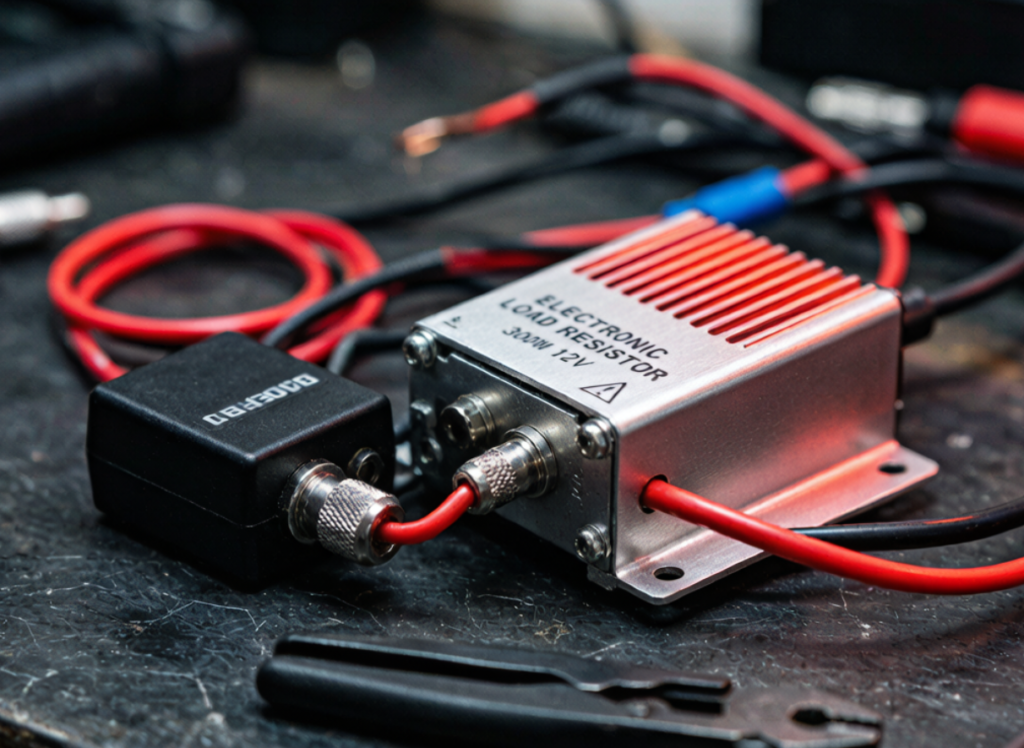
A load resistor simulates the halogen’s current draw by dissipating the extra wattage as heat. A typical 6-ohm, 50W resistor wired in parallel with each LED bulb brings the total load back to halogen levels, restoring normal flash speed. Resistor basics apply here: the resistor must be matched to the voltage and wattage difference. Resistors get hot — mount them on metal surfaces away from plastic and wiring.
| Solution | How It Works | Best For |
|---|---|---|
| Load resistor (6Ω / 50W) | Simulates halogen load | Traditional flasher relays |
| Electronic flasher relay | Timing-based, load-independent | Older vehicles, simple swap |
| CANbus decoder | Suppresses error codes | Modern CANbus vehicles |
CANbus Decoders
Modern vehicles use CANbus electrical systems that monitor each bulb digitally. LED bulbs can trigger “bulb out” warnings or error codes even when functioning perfectly. A CANbus decoder (built into many LED bulbs or added separately) mimics the halogen’s electrical signature to satisfy the vehicle’s monitoring system. If your car shows a bulb-out warning after LED installation, you need CANbus-compatible bulbs or a decoder.
Installation Guide
Step 1: Confirm your bulb type (1156, 1157, 7440, etc.). Step 2: If using load resistors, mount them on a metal surface first (they generate heat). Step 3: Wire the resistor in parallel — one lead to the positive, one to the negative of the turn signal circuit. Step 4: Install the LED bulb and test. If hyper flash persists, check resistor rating and connections. For CANbus vehicles, use decoder-equipped bulbs. TUHO’s LED turn signal bulbs offer plug-and-play options with built-in CANbus compatibility.
Reliability and Lifespan
LED turn signals typically last 25,000-50,000 hours — 20-50x longer than halogen. They respond instantly, improving safety by communicating your intent faster. The only downside is the compatibility work at installation. Once properly installed (with resistors or decoders as needed), LED turn signals are essentially maintenance-free. For fleet operators and distributors, the reduced replacement frequency translates to real cost savings.
FAQ
Why do my LED turn signals hyper flash?
Hyper flash occurs because the flasher relay sees the LED’s low current draw as a burned-out bulb and speeds up the blink rate. Fix it with load resistors or an electronic flasher relay.
Do I need resistors for LED turn signals?
For traditional flasher relays, yes — a 6Ω/50W resistor per bulb restores normal flash speed. For CANbus vehicles, use decoder-equipped bulbs instead.
Are load resistors dangerous?
They generate significant heat (they dissipate ~18W each). Mount them on metal surfaces away from plastic and wiring to prevent heat damage. Quality resistors are safe when installed correctly.
Can LED turn signals cause error codes?
On CANbus vehicles, yes. Use CANbus-compatible bulbs or decoders to prevent “bulb out” warnings and dashboard errors.
LED Turn Signals Without the Headache — From TUHO
TUHO Lighting manufactures LED turn signal bulbs with CANbus-compatible options that minimize hyper flash and error codes. For distributors and brands, we deliver reliable, compliant LED lighting with factory-direct consistency. Explore our turn signal range or contact our team.