 跳至内容
跳至内容 
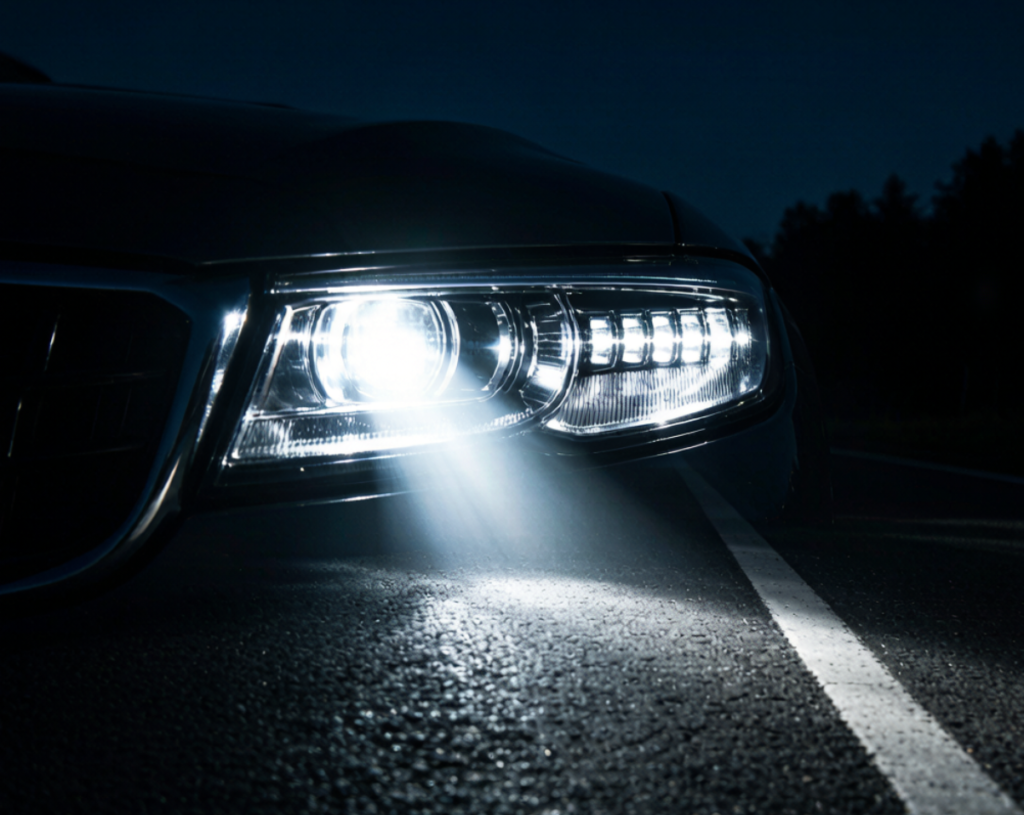
Halogen, HID, and LED headlight technologies each have distinct strengths. If you are new to headlight upgrades, this guide explains the differences simply and helps you choose. TUHO Lighting manufactures LED headlight bulbs and projector LED systems for modern vehicles.
Three Headlight Technologies
Your car’s headlights use one of three light sources: halogen, HID (high-intensity discharge / xenon), or LED. Each produces light differently — and that changes brightness, color, lifespan, energy use, and cost. The headlamp technology overview explains the engineering. Understanding the basics lets you make an informed upgrade instead of relying on marketing claims.
Halogen: The Familiar Baseline
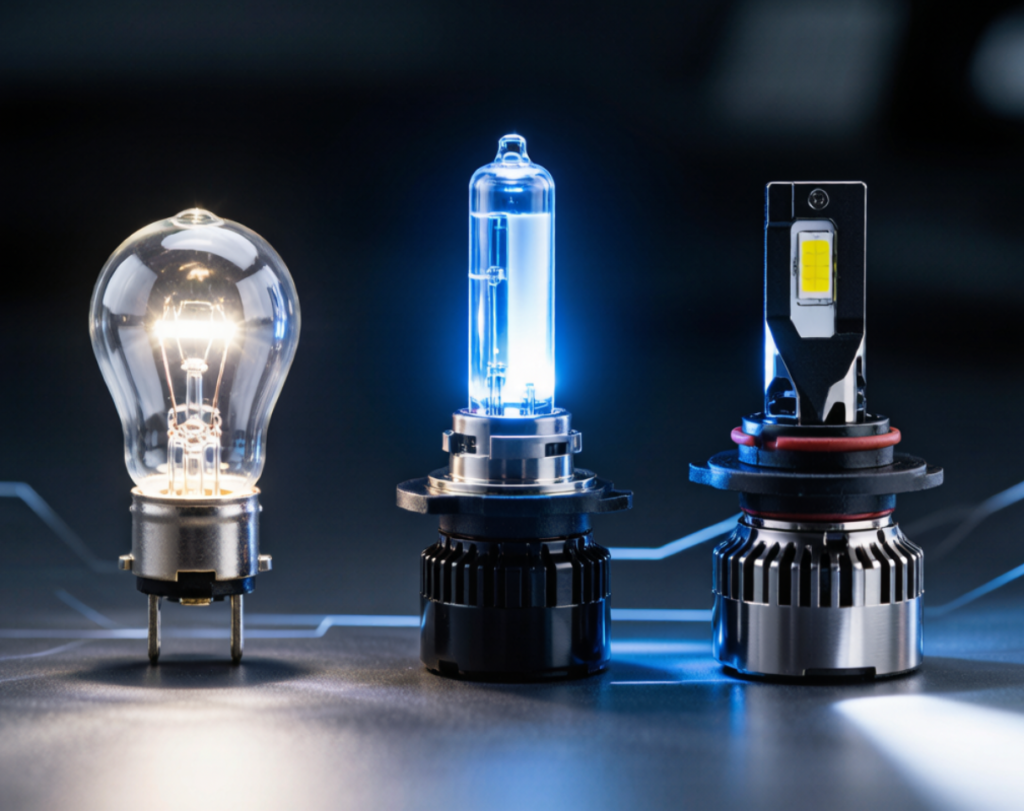
Halogen bulbs use a tungsten filament inside a gas-filled quartz envelope. They are cheap, simple, and instantly familiar — the warm white light most cars had for decades. Halogen produces roughly 1,000-1,500 lumens per bulb with a color temperature around 3,200K. Lifespan: 300-1,000 hours. Advantages: low cost, easy replacement, proven. Disadvantages: dimmer, yellower, shorter-lived, and less efficient than modern options.
HID (Xenon): The Bright Upgrade
HID bulbs use an electrical arc between electrodes in a gas-filled chamber to produce intense light. Output: 2,800-3,500 lumens per bulb — roughly 2-3x halogen. Color temperature: 4,300-6,000K (white to blue-white). Lifespan: 2,000-3,000 hours. HID requires a ballast to ignite and regulate the arc, plus projectors to control the beam properly. HID was the premium standard for years, but it has largely been overtaken by LED for new applications.
LED: The Modern Standard
LED headlights use light-emitting diodes — semiconductors that emit light when current passes through them. Output varies widely: quality bulbs deliver 3,000-6,000+ lumens per pair with instant full brightness. Color temperature: 5,000-6,500K (crisp white). Lifespan: 30,000-50,000 hours. Advantages: instant-on, energy-efficient, compact, extremely long-lived. Disadvantages: requires effective thermal management and proper beam focus. LED is now the default choice for new vehicles and the most popular upgrade path.
Brightness Comparison
| Technology | Typical Output (per bulb) | Relative Brightness |
|---|---|---|
| Halogen | 1,000-1,500 lm | Baseline |
| HID | 2,800-3,500 lm | ~2-3x halogen |
| LED (quality) | 3,000-6,000+ lm | ~3-4x halogen |
Color Temperature Explained
Color temperature, measured in Kelvin (K), describes light appearance. Low Kelvin = warm/yellow; high Kelvin = cool/blue. Halogen sits around 3,200K (warm white). HID ranges 4,300-6,000K. Quality LEDs run 5,000-6,500K — a crisp white that improves contrast and reduces eye strain. Color temperature science explains why 5,000-6,000K is considered ideal for nighttime driving. Avoid cheap LEDs claiming 8,000K+ — bluer light performs worse in rain and fog.
Lifespan Comparison
Halogen: 300-1,000 hours — expect replacement every 1-2 years. HID: 2,000-3,000 hours. LED: 30,000-50,000 hours — effectively the life of the vehicle for most drivers. The lifespan advantage is one of the strongest reasons to upgrade to LED, especially for drivers who use headlights daily. A quality LED bulb may outlast three cars, while halogen bulbs are replaced repeatedly.
Energy Efficiency
Halogen: 55W per bulb typical, mostly wasted as heat. HID: 35W per bulb, more efficient but requires ballast power. LED: 15-30W per bulb for higher output — LED delivers more light with less energy. Lower wattage also means less strain on the vehicle’s electrical system and lower heat inside the housing. Energy efficiency matters for fuel economy (marginally), battery life, and thermal management.
Cost of Ownership
| Factor | Halogen | HID | LED |
|---|---|---|---|
| Purchase cost | $5-20 | $40-120 | $30-150 |
| Lifespan | 300-1,000 hrs | 2,000-3,000 hrs | 30,000-50,000 hrs |
| Replacement frequency | Frequent | Occasional | Rarely |
| 10-year cost (est.) | Highest | Moderate | Lowest |
Halogen is cheapest upfront but most expensive over time. LED’s longer life and lower energy use deliver the best long-term value for most drivers.
Which Should You Choose?
For most drivers in 2026, quality LED bulbs are the best choice: brighter than halogen, comparable to HID, vastly longer-lived, and increasingly affordable. Choose HID if you want maximum lumen output from an older design and already have projector housings. Keep halogen if you only need a cheap immediate replacement and drive rarely. For the best balance of brightness, lifespan, and value — LED wins.
FAQ
Which headlight type is brightest?
Quality LED bulbs produce the highest output (3,000-6,000+ lm per pair) and are the brightest of the three for modern applications. HID is comparable in output but older technology.
Are LED headlights better than HID?
For most drivers, yes — LED offers similar or better brightness, much longer lifespan, instant-on, and lower energy use. HID retains an edge only in certain projector retrofit scenarios.
Can I replace halogen with LED bulbs directly?
Usually yes, with plug-and-play LED bulbs sized for your bulb type (H4, H7, 9005, etc.). Verify housing space for the heat sink and check CANbus compatibility for modern vehicles.
What color temperature is best for headlights?
5,000-6,500K is ideal — crisp white that improves contrast without the glare and rain-performance loss of bluer (8,000K+) lights.
Upgrade to Quality LED Headlights
TUHO Lighting manufactures LED headlight bulbs engineered for real performance — brightness that holds, cooling that works, and lifespan that lasts. Explore our LED headlights or contact our team for sourcing or white-label partnerships.