 跳至内容
跳至内容 
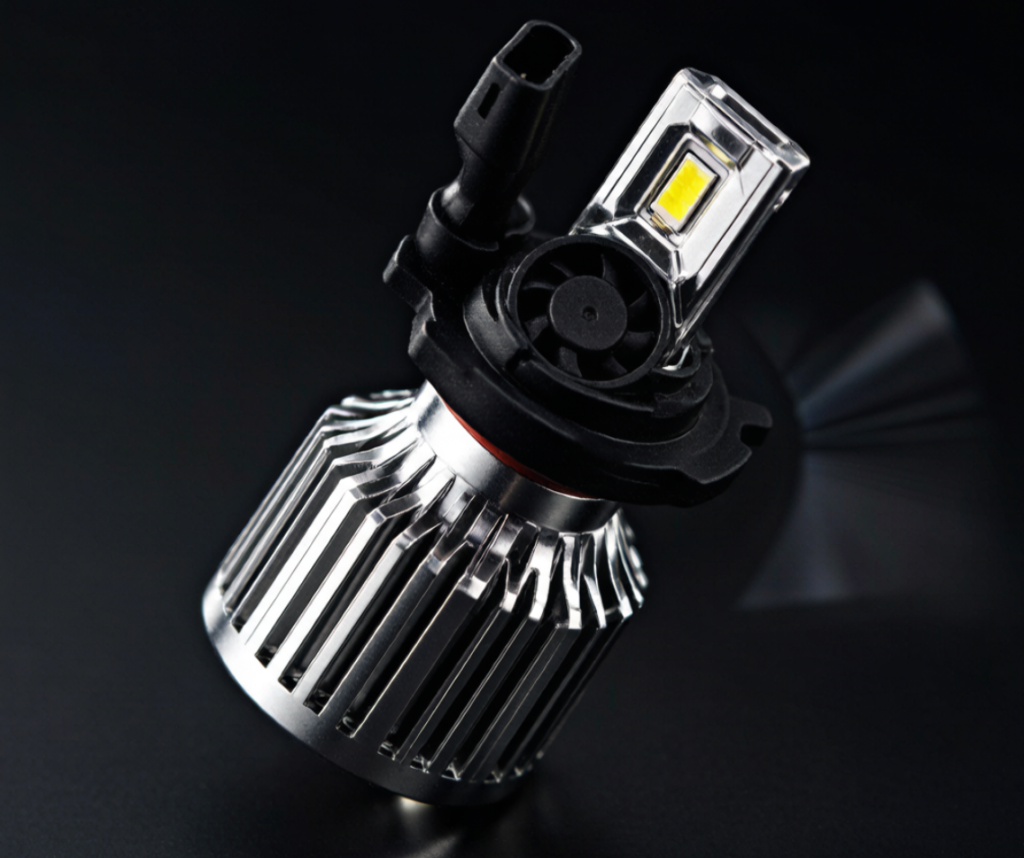
LED headlight performance depends on one thing many buyers overlook: cooling. The difference between a fan-cooled and passively-cooled LED bulb affects brightness stability, lifespan, and reliability. TUHO Lighting manufactures both high-power LED headlight bulbs and plug-and-play systems engineered for real-world thermal performance.
Why Cooling Matters for LED Headlights
LEDs are far more efficient than halogen or HID, but they still convert a significant portion of electrical energy into heat. Unlike halogen bulbs, which tolerate extreme heat, LEDs degrade rapidly above their rated junction temperature. The LED semiconductor physics explains why thermal management is the single most important factor in LED longevity. A well-cooled LED delivers stable brightness for 30,000-50,000 hours; a poorly cooled one can dim and fail in months.
The Heat Problem: How LEDs Generate Heat
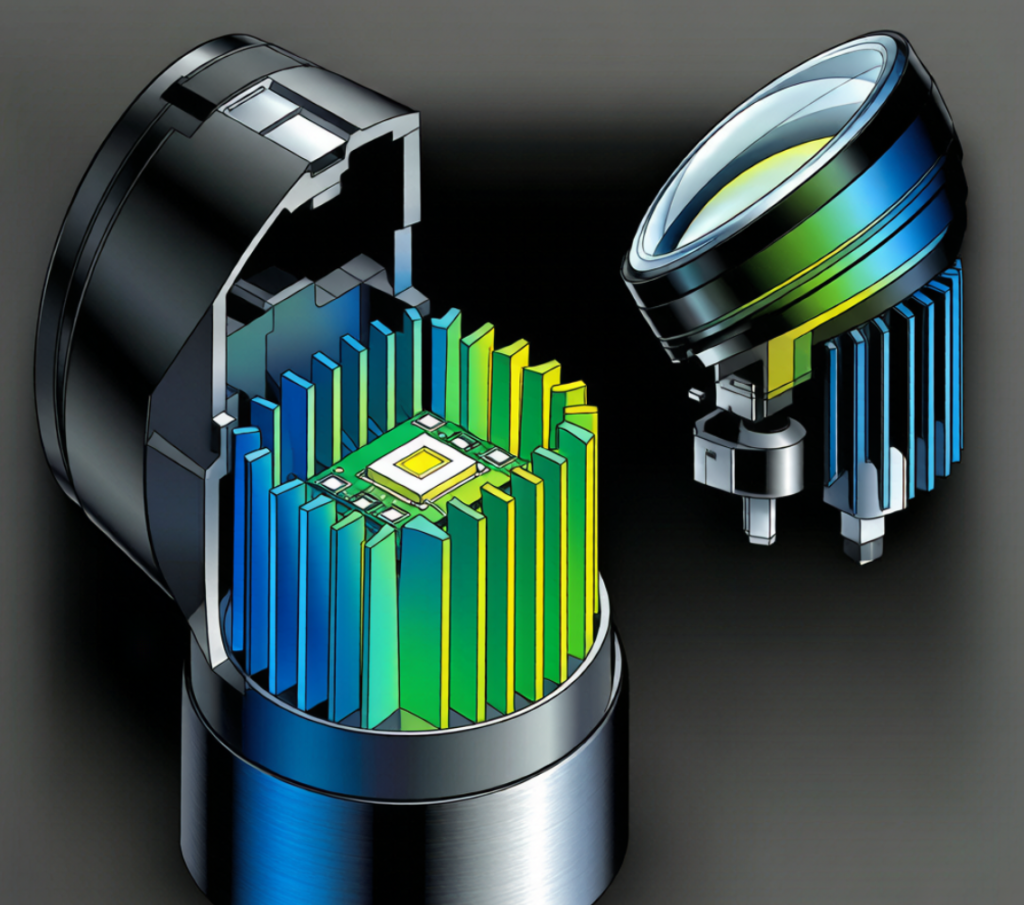
High-power automotive LEDs draw 20-60 watts per pair. Most of that energy becomes heat at the junction. If junction temperature exceeds ~150°C (depending on chip), luminous flux drops, color shifts, and the chip degrades permanently. The heat must be moved away from the chip — through the substrate, to a heat spreader, and into the surrounding air. This is exactly what a cooling system does, and it is why design quality separates premium LED bulbs from cheap ones.
Passive Cooling: Heat Sink Design
Passive cooling uses an aluminum heat sink to draw heat away from the LED without moving parts. Large finned heat sinks maximize surface area for natural convection. Advantages: zero noise, zero moving parts, virtually unbreakable reliability, and no failure mode beyond the LED itself. Disadvantages: physical size limits (heat sinks must be large enough), and reduced efficiency in still, hot conditions (e.g., engine bay heat soak). TUHO’s passively cooled LED bulbs use optimized fin geometry for compact vehicles where fan systems cannot fit.
Active Cooling: Fan-Based Systems
Fan-cooled LEDs use a micro fan mounted on the heat sink to force air across the fins, dramatically increasing heat dissipation. This allows a much smaller heat sink for the same wattage — critical for bulbs that must fit sealed housings. Turbo-style fans (blower type) move air through the fin core rather than over the surface, improving efficiency further. The trade-off: a moving part that can wear out, collect dust, or fail silently. Modern fans use dual ball bearings and rated 30,000+ hours, but they remain the most common failure point in fan-cooled bulbs.
Fan vs Passive: Head-to-Head
| Factor | Fan Cooling (Active) | Passive Cooling |
|---|---|---|
| Cooling efficiency | High — small sink, big output | Lower — needs larger sink |
| Moving parts | Yes (fan) | No |
| Noise | Audible in some installs | Silent |
| Dust sensitivity | Fan can clog, reduce cooling | Fins need periodic cleaning |
| Failure mode | Fan failure → LED overheats | No failure mode |
| Fitment flexibility | Fits sealed housings | Needs housing space |
| Typical wattage | 30-60W | 15-35W typical |
Impact on LED Lifespan
LED lifespan is directly tied to junction temperature. As a rule of thumb, every 10°C reduction in junction temperature roughly doubles LED lifespan. A fan-cooled bulb maintaining a 40°C junction can theoretically outlast a passive bulb running at 80°C — but only if the fan keeps working. Passive designs trade peak cooling for guaranteed longevity: no fan failure means no thermal cascade. For the rated 30,000-50,000-hour life, both designs work when properly engineered.
Reliability in Real Driving
Real-world conditions matter: engine bay heat, dust, moisture, vibration, and long hot-idle periods. Fan systems in sealed housings can recirculate hot air if the housing lacks airflow. Passive systems can heat-soak when the vehicle is parked in summer. The most reliable designs are those tested under automotive lighting standards with thermal cycling, vibration, and dust ingress validation. TUHO tests every product with aging and production inspection before shipment.
Noise and Installation
Fan noise is a real consideration. In open-engine-bay installations it is inaudible; in cabin-adjacent or motorcycle applications it can be noticeable. Passive systems are always silent. Installation complexity is similar — both are usually direct replacements — but fan bulbs are often more compact, easing fitment in tight housings. If absolute silence matters (motorcycles, classic cars, custom builds), passive is safer.
Which Cooling System Should You Choose?
Choose fan cooling for high-wattage output in sealed, space-constrained housings. Choose passive cooling for maximum reliability, silence, and long-term dependability. For most modern drivers, a well-engineered fan-cooled bulb is the best balance of brightness and fitment. For classic cars, motorcycles, and long-life priorities, passive is the better bet. Consider your housing type, wattage needs, and how long you plan to keep the vehicle.
If you are a distributor, brand, or fleet operator sourcing LED headlights in volume, TUHO provides tailored product matching — we help you select the right cooling design for your market’s vehicles and conditions, with factory-direct consistency and compliance-first engineering.
FAQ
Do LED headlights need a fan?
High-power LEDs need active cooling to maintain safe junction temperatures in compact housings. Lower-wattage LEDs can rely on passive heat sinks. The right choice depends on wattage and housing space.
Which is more reliable: fan or passive LED cooling?
Passive cooling has no moving parts and therefore no fan-failure mode. Fan cooling is more effective at heat removal but introduces a wear component. Both are reliable when properly engineered and tested.
How long do LED headlight fans last?
Quality fans are rated 30,000-50,000 hours with dual ball bearings. Fan failure is the most common failure point in fan-cooled bulbs, which is why TUHO validates fan life through aging tests.
Can a fan-cooled LED fail from overheating?
Yes, if the fan fails and the bulb continues operating at high wattage. Quality designs include thermal protection and redundant heat-sink capacity to reduce this risk.
Premium LED Headlights with Proven Cooling — From TUHO
TUHO Lighting engineers LED headlight bulbs with cooling systems tested for real driving conditions. From fan-cooled high-power designs to compact passive solutions, we manufacture for global automotive brands and distributors. Explore our LED headlight range or talk to our team about your requirements.